
Choosing a sandalwood oil supplier B2B is more than placing an order. For a fragrance house or a cosmetics laboratory, it means entering a sourcing relationship in which traceability, analytical documents and logistics weigh as much as the olfactory signature. From Lifou, in the Loyalty Islands, Liflor distils an endemic Pacific sandalwood, Santalum austrocaledonicum, and ships it worldwide. This page gathers the answers buyers ask before they commit: samples, minimum quantities, certificate of analysis and export terms from New Caledonia.
Choosing a sandalwood oil supplier B2B: the route from Lifou
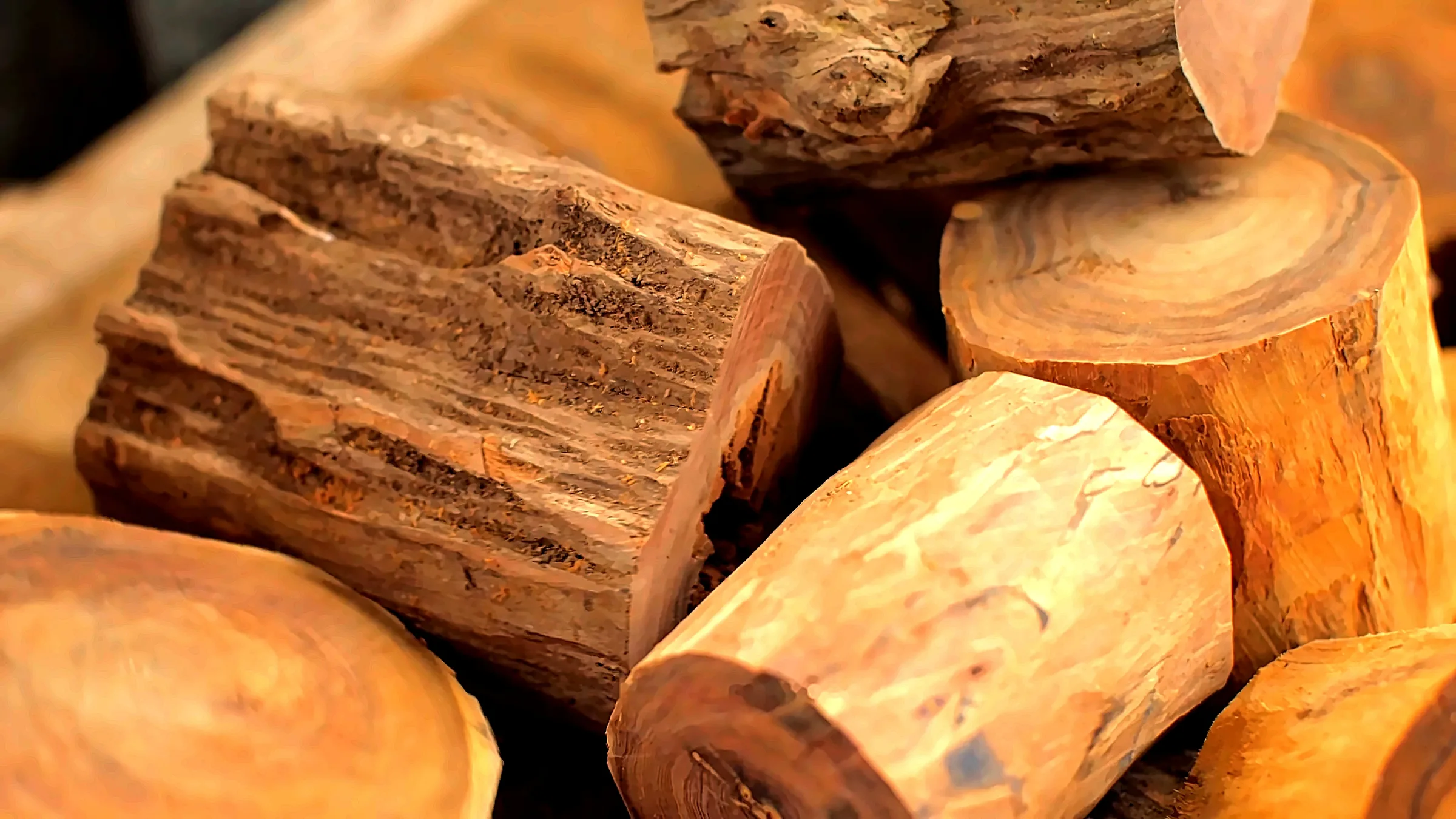
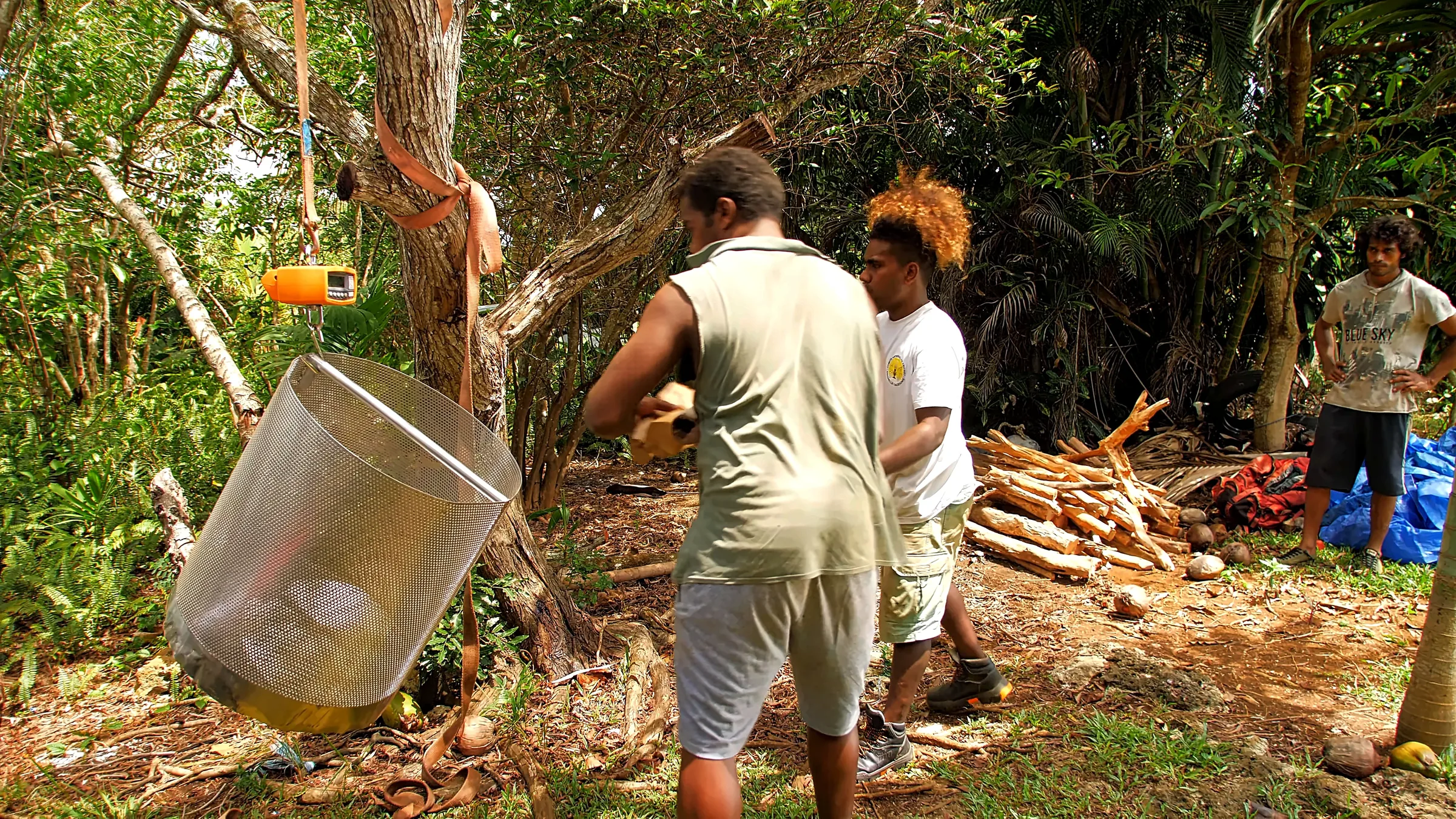
The supply route is short, and that is deliberate. The wood comes from customary plots in the Loyalty Islands; it is distilled on site, then packed before shipping. This is not a minor detail: in New Caledonia, exporting raw sandalwood is prohibited and the export of spent wood is restricted, according to Outremers360 (2015). What leaves the territory is therefore a finished oil, distilled in its place of origin. For a buyer, that removes intermediaries and shortens the chain of responsibility between the forest and the first sample vial.
The resource is scarce and geographically confined: harvestable Caledonian sandalwood is found only in the Loyalty Islands and on the Isle of Pines, according to Outremers360 (2015). That scarcity sets a principle worth grasping from the first commercial conversation. Volumes are measured, annual output is limited, and the price of a sandalwood oil does not read like that of a commodity material. You will not find a published price list; it is provided on request, depending on quantity and destination.
A place, a plot: exactly where your oil comes from
A buyer's reassurance often begins with a map. Liflor's sandalwood grows in Lifou, in the tribe of Chépénéhé, within the district of Wetr, in the Loyalty Islands. The wood comes from customary plots, and the distillery buys it from their holders, in the region of 1,000 XPF per kilogram according to the house, a figure still to be confirmed. That mechanism matters: part of the value stays anchored in the community that holds and tends the resource, within the Kanak customary framework. For you, knowing the tribe and the plot of origin is not a decorative flourish; it is the foundation of a traceability your own clients will ask of you in turn.
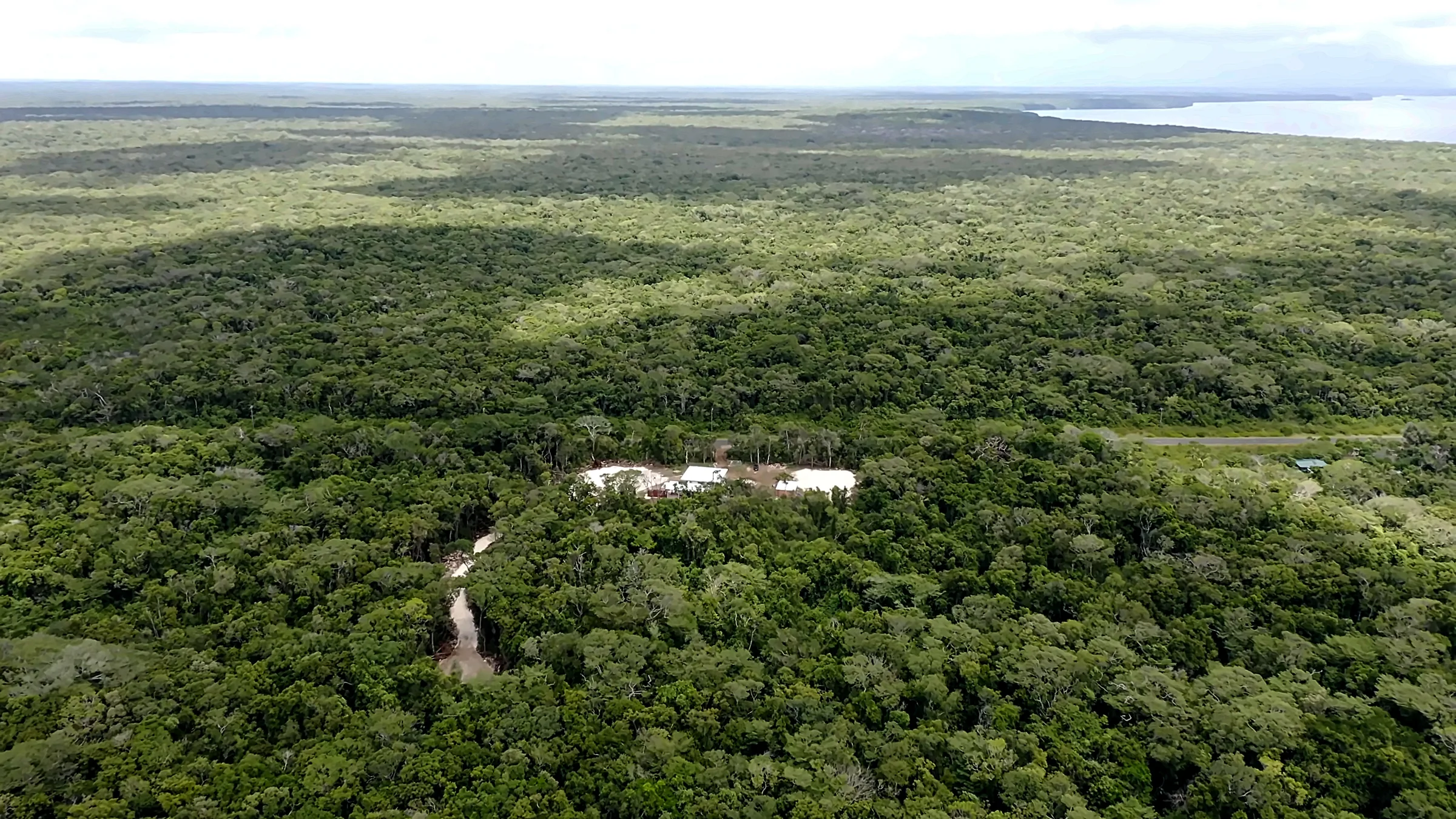
Seen from above, the logic of the short circuit becomes plain. Between the forest, the still and the loading dock, the distances are measured in kilometres, not in borders. That proximity limits handling, cuts out intermediaries and makes it easier to trace information when a batch has to be documented. A steady distillation craft rests on this too: a short chain, held by a single house from end to end.
Samples, minimum order quantities and first orders
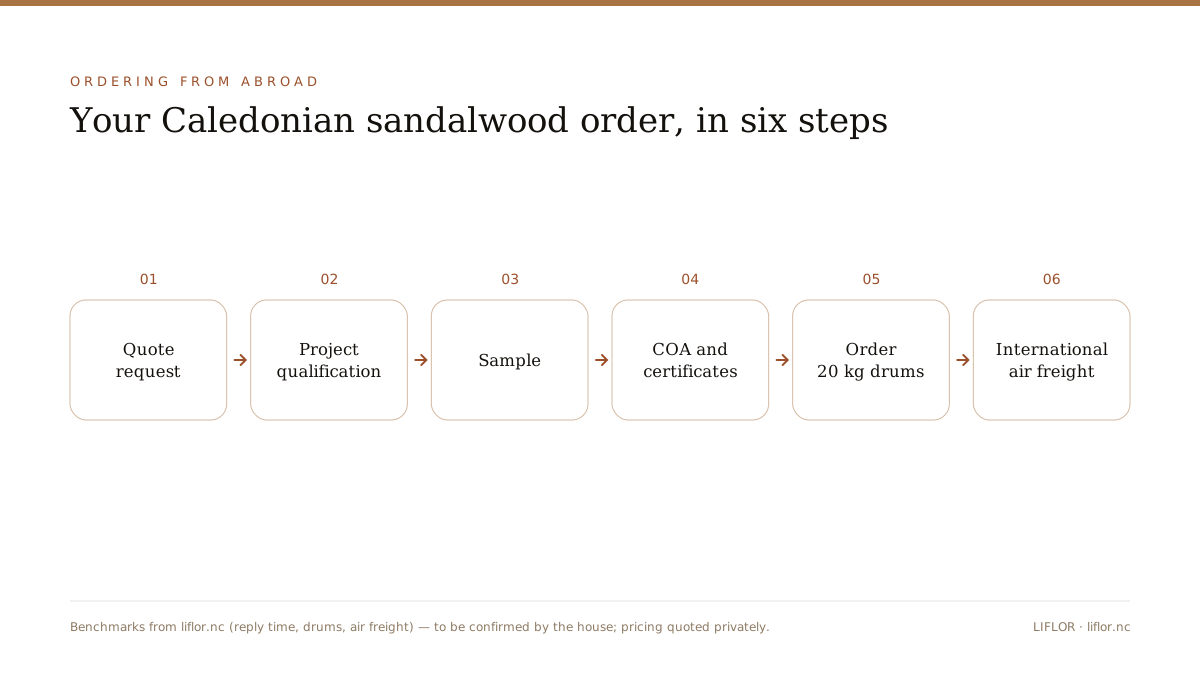
The usual process begins with a sample. A perfumer wants to smell the material on a blotter and assess it in accord before opening an account: that is legitimate, and it is expected. A sample also lets you check consistency from one batch to the next, a decisive criterion for a house that will have to reproduce a formula over several years. The minimum order quantity and the sample format are discussed according to your use, whether laboratory evaluation, a formulation trial or a pilot run. Given an annual output in the region of two tonnes, a figure provided by the distillery and still to be confirmed, the house favours clear commitments over one-off purchases.
White, yellow, Indian sandalwood: sorting out the labels
Trade circulates a host of labels, white sandalwood, yellow sandalwood, Indian sandalwood, sometimes "amyris sandalwood", which mix the colour of the oil, the botanical species and the geographic origin. These tags serve the general public, but they are not enough for a formulator. "White sandalwood" most often means Indian sandalwood, Santalum album; "amyris sandalwood" does not even belong to the genus Santalum. Only two markers truly settle the matter: the botanical species, given in Latin, and the certificate of analysis. Liflor's oil belongs to a single, endemic species, Santalum austrocaledonicum, and is not to be confused with any other origin.
The gap shows up in the chemistry. Total santalol content varies widely from one species to the next: around 90 % for Indian sandalwood, roughly 51 to 65 % for Caledonian sandalwood and close to 39 % for Australian sandalwood, according to Wikipedia citing the ISO 3518 standard, a primary source still to be confirmed. These figures do not rank the materials from best to worst; they describe different oils, with tenacity and facets of their own. A drier, more mineral Caledonian sandalwood does not replace a Mysore sandalwood: it opens another olfactory register, one you will assess on a blotter before any decision.
Certificate of analysis (COA) and compliance: what you receive
The certificate of analysis is the central document in the file. It sets out the composition of the oil, first and foremost the santalol content, which determines its olfactory and regulatory value. The Caledonian chemotype shows a balance of its own: according to Wikiphyto, pending confirmation against ISO 3518, the oil of Santalum austrocaledonicum runs at roughly 38 to 45 % cis-α-santalol and 12 to 17 % cis-β-santalol, together with lanceol and α-bergamotol. The distillery, for its part, states an α-santalol content above 40 %, a producer figure to be validated. Recorded batch by batch, these values are what allow you to guarantee repeatability in formulation; the detail is set out on the specifications page.
The global sandalwood oil market rose from around USD 174.4 million in 2024 towards a projected USD 261.7 million by 2030, a compound annual growth of close to 7 %, according to Grand View Research.
That sustained demand, for a material whose growth cycles run into decades, keeps the world market tight. For reference, Indian sandalwood trades at around USD 3,800 to 4,200 per kilo and Australian sandalwood at around USD 1,600 to 2,000, according to Global Growth Insights (2025); the price of the Caledonian oil is not made public. For a buyer, the issue is therefore not only unit price: it is the assurance of a legal, traceable origin that can be renewed year after year.
A material under strain: plan ahead rather than scramble
Global demand for Santalum album sandalwood is estimated at 5,000 to 6,000 tonnes a year, against a supply held back by growth cycles of fifteen to twenty years and more, according to Discover Applied Sciences (Springer, 2024).
That strain has a very concrete meaning for a buyer: sandalwood cannot be produced on demand. The Caledonian tree matures slowly, in the region of thirty years at natural minimum, fifteen to twenty-five years in plantation, with optimal harvest between forty and fifty years, according to Takone, durations to be confirmed. To this biology is added a strict framework: harvesting is governed by deliberation No. 2010-71/API of 19 August 2010, by annual quotas and by a resource inventory carried out roughly every ten years, according to ERPA. A given year's volumes are therefore set in advance. A shrewd buyer thinks in multi-year contracts and reserves quantities early, rather than hoping for a batch to be available at the last minute.
Packaging and export logistics from New Caledonia
Packaging is done in drums, suited to long-distance transport and to preserving the oil. Shipment leaves New Caledonia for the rest of the world; lead times and incoterms depend on the destination and are set at the quotation stage. Two local particularities are worth knowing for overseas buyers. Caledonian taxation is based on the TGC, not VAT; the business identifier is the RIDET, not a SIRET. These differences do not complicate the transaction; they simply appear on the commercial documents, where local amounts are expressed in Pacific francs (XPF).
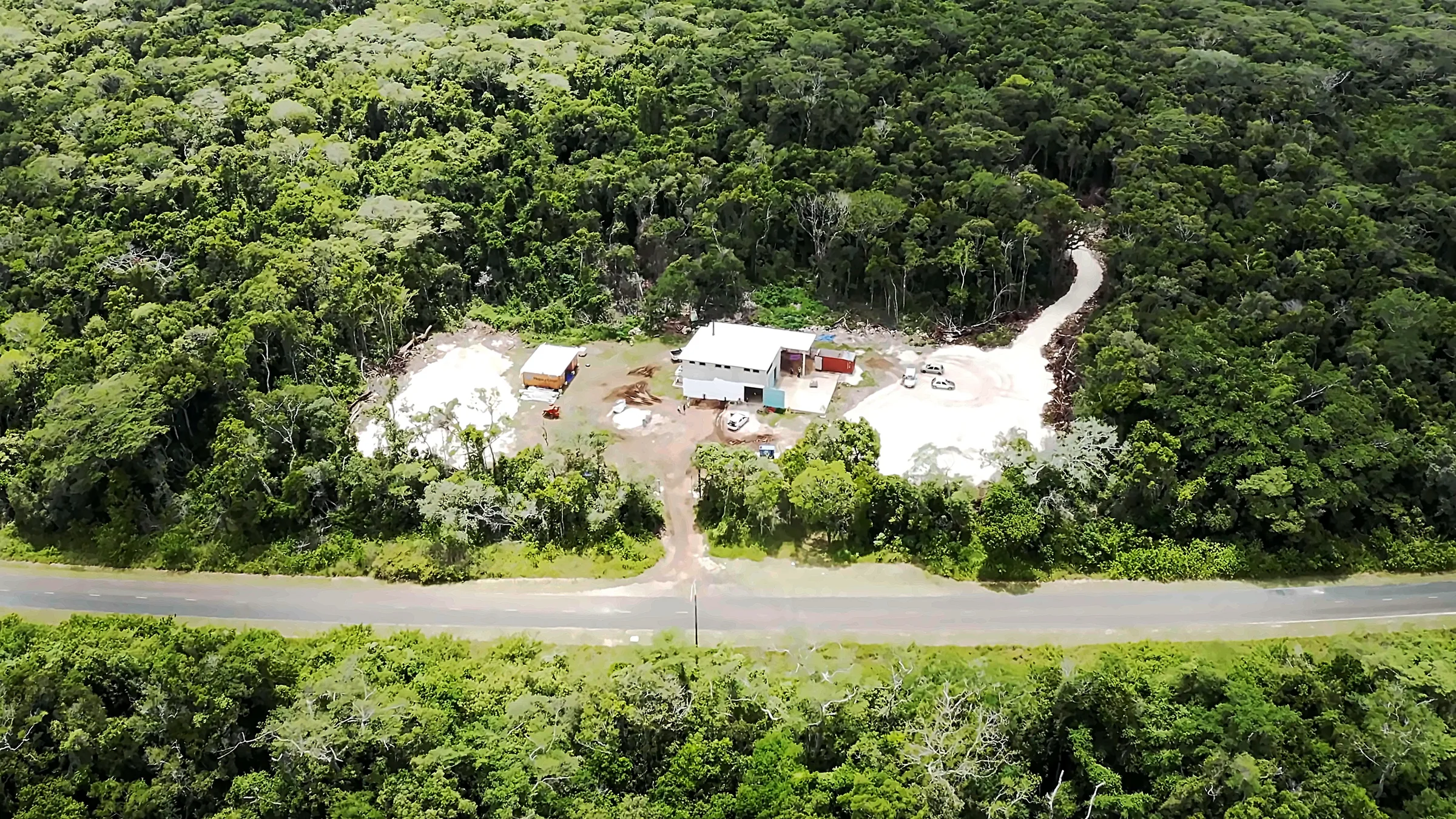
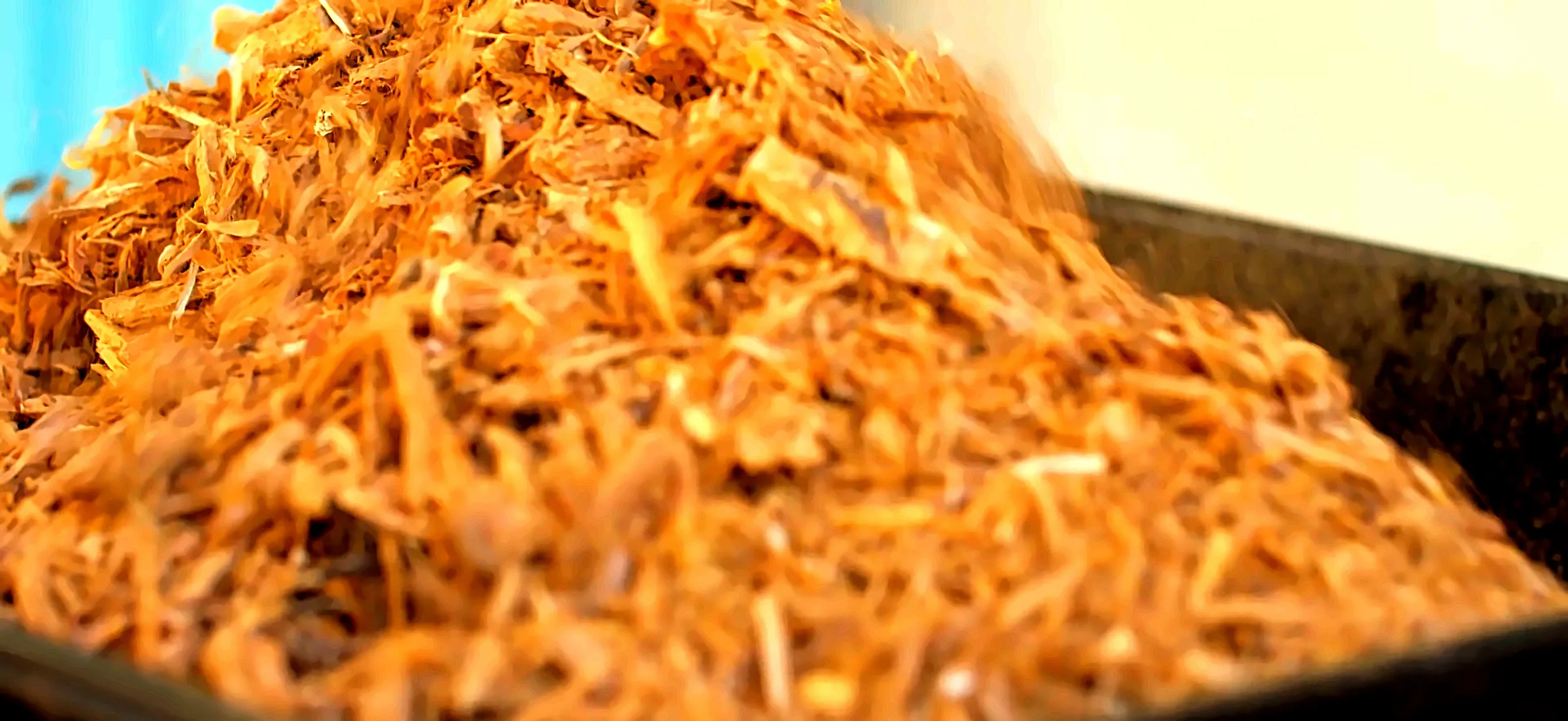
On site, distillation runs continuously through the season. The hydrodistillation of a sandalwood heartwood extends over several tens of hours, in the region of 48 to 72 hours according to the distillery, a duration still to be confirmed. This demanding rhythm is why every batch is closely monitored and why the house documents precisely what it ships.
Batch-by-batch traceability: the guarantees enclosed with your order
The reassurance offered by a luxury ingredient rests on a verifiable provenance. Liflor is certified ECOCERT For Life, the standard for corporate social responsibility and responsible sourcing, to be distinguished from the organisation's separate fair-trade standard. The supply chain operates within a Kanak customary framework and under the quotas of the Loyalty Islands Province, whose replanting rule requires three trees planted for every tree felled, according to the FSC (2023). The house has also been a partner of LMR Naturals by IFF since 2017, according to IFF, a relationship that speaks to its ability to meet the standards of fine perfumery. The detail of these guarantees is set out on the certifications page.
Working a Pacific sandalwood into your formulas
Once the batch is approved, the formulation gesture remains. In fine fragrance, sandalwood is worked as a base note: it carries the sillage, rounds off woody accords and fixes the more volatile materials. A Caledonian chemotype, drier and more mineral than Mysore sandalwood, sits happily alongside ambers, leathers and white flowers, giving them a foundation without weighing them down. In cosmetics, soaps, skincare, scented candles, it acts as an olfactory signature and a fixative. Liflor supplies it as a perfumery and cosmetics ingredient, never as a product with any therapeutic purpose: this is a formulation choice, not a health claim. The dosage is set as finely as possible, the material being at once scarce and tenacious.
Building your supplier file: the steps to follow
Before committing, assemble a file. Here is what falls to you to request, and what the house provides without reservation:
- The exact botanical species and the precise origin (plot, tribe, island);
- The batch certificate of analysis, santalol content first;
- Proof of certification and legality: For Life, quotas, felling certificate;
- A sample representative of the batch you will actually receive;
- The packaging, the incoterms and the lead time to your country;
- The local commercial documents: RIDET, TGC reference, amounts in XPF.
Assembled, this file turns a purchase decision into a rational assessment: you compare documented materials, not promises. The price, provided on request, is then read against a complete provenance rather than a bare per-kilo rate. It is precisely this set of documents that the house keeps at your disposal, from the first sample through to the quotation.
Frequently asked questions
Can you order sandalwood essential oil from abroad?
Yes. Liflor sells B2B internationally, packs the oil in drums and ships worldwide from New Caledonia. The price is not published: it is provided on request, according to quantity and destination. Each order comes with the batch certificate of analysis.
What is sandalwood essential oil used for in perfumery?
In fine fragrance and cosmetics, sandalwood is a base note valued for its tenacity and woody smoothness, and it also acts as a fixative. Liflor supplies it as a perfumery and cosmetics ingredient, not as a product with any therapeutic purpose.
What can replace sandalwood essential oil?
Some formulators turn to amyris (Amyris balsamifera), other Santalum species or santalol-based synthetics. The olfactory profile differs from one origin to another, however: a Caledonian sandalwood, drier and more mineral, is not a like-for-like substitute. The choice depends on the accord you are after.
How much does sandalwood essential oil cost?
Prices vary widely by species: Indian sandalwood trades at around USD 3,800 to 4,200 per kilo and Australian sandalwood at around USD 1,600 to 2,000, according to Global Growth Insights (2025). The price of the Caledonian oil is not made public and is provided on quotation.
Is there a minimum order quantity?
Yes, a minimum order quantity applies, but it is discussed according to your use: laboratory evaluation, a formulation trial or a pilot run. With output limited to around two tonnes a year according to the distillery (a figure to be confirmed), the house favours clear commitments. A sample usually precedes any first order.
What exactly does the For Life label certify?
For Life certifies corporate social responsibility and responsible sourcing; the separate fair-trade standard, on the other hand, covers fair trade. These two ECOCERT standards were split in 2017. Liflor is certified ECOCERT For Life.
A well-founded supply relationship begins with a precise conversation: your use, your volumes, your schedule. Share these, request a sample and the matching certificate of analysis, then confirm logistics to your country. You will receive a Pacific sandalwood oil whose tree, plot and distillation you know. To open the discussion, simply request a quote.
Sourcing Caledonian sandalwood for a project? Talk to the distillery.
Request a quote