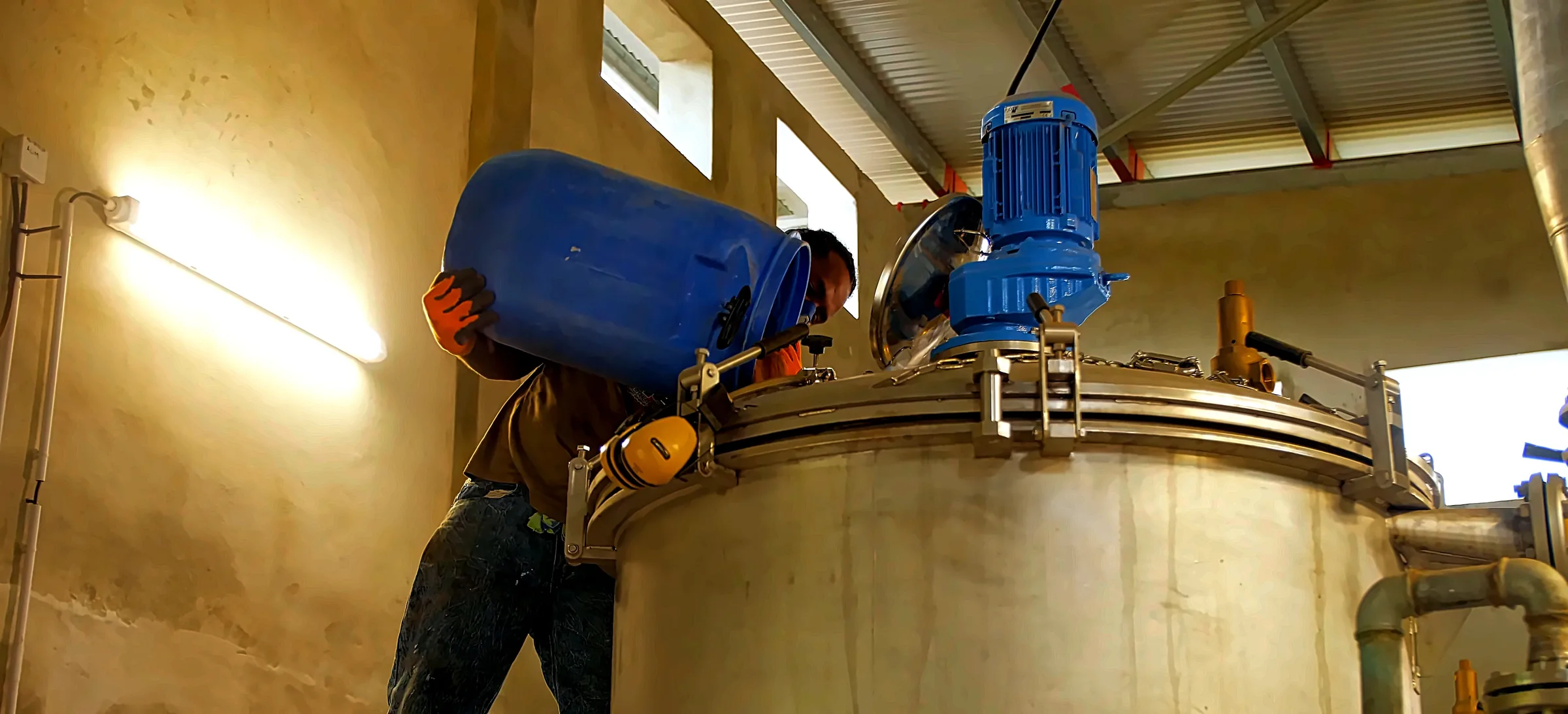
Sandalwood hydrodistillation is the beating heart of Liflor's work: it is here, in the Lifou distillery, that the wood surrenders its scent and becomes a raw material for fine perfumery. The principle is old and almost disarmingly plain — water, heat, time — yet every setting shapes the quality of the oil that will run from the coil. Here is what happens, from forest to still.
Sandalwood hydrodistillation: principle and definition
Hydrodistillation means immersing the wood, reduced to chips, in the water of a still, then bringing the whole to the boil. The rising steam takes up the most volatile aromatic molecules, passes through a swan neck and condenses against a cooled coil. On the way out, water and oil separate by density: the essential oil floats, while the floral water, or hydrosol, is collected beneath it. The method differs from steam distillation, where steam from a separate boiler passes through the material without it sitting in water. For a dense, resinous wood such as sandalwood, whose santalols are barely volatile and firmly held in the fibres, prolonged immersion helps draw out these heavy molecules.
The still, the swan neck and cohobation
Behind a slightly technical word lies a simple device, all but unchanged for centuries. The body of the still holds the water and the chips; beneath it, a heat source keeps the boil going. At the top, a head funnels the vapours towards the swan neck, that curved tube which guides them gently to the condenser. There, a coil bathed in cold water tips the vapour back to liquid, and the Florentine flask lets oil and hydrosol settle by themselves according to their density. The diagram fits on a single sheet; all the difficulty lies in tending the fire and reading the time.
- The body, where the heartwood chips steep and then boil in water.
- The swan neck, which carries the santalol-laden vapours towards the cold.
- The coil, where the vapour condenses against chilled water.
- The Florentine flask, where the oil floats and the hydrosol settles.
One detail sets careful distilleries apart from the rest: the fate of the hydrosol. Santalols are so heavy that a share stays dissolved in the floral water instead of rising. To waste nothing, some houses practise cohobation, returning that hydrosol to the still to draw out the last traces of oil. On a wood as precious as sandalwood, this patient step is far from trivial: it concentrates the fruit of several days of fire. You will find the same attention to detail in our craft.
From the Lifou forest to the heartwood
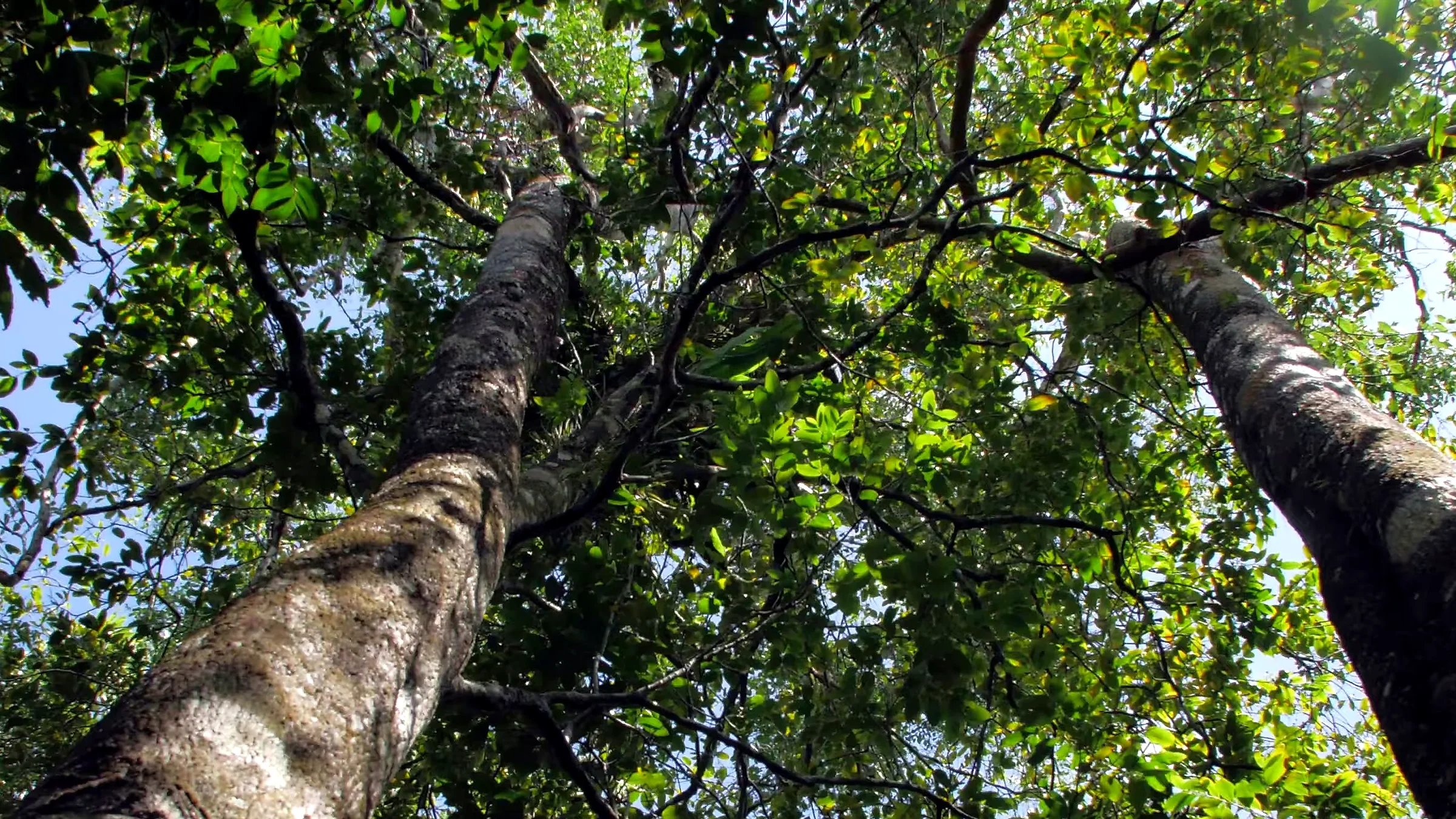
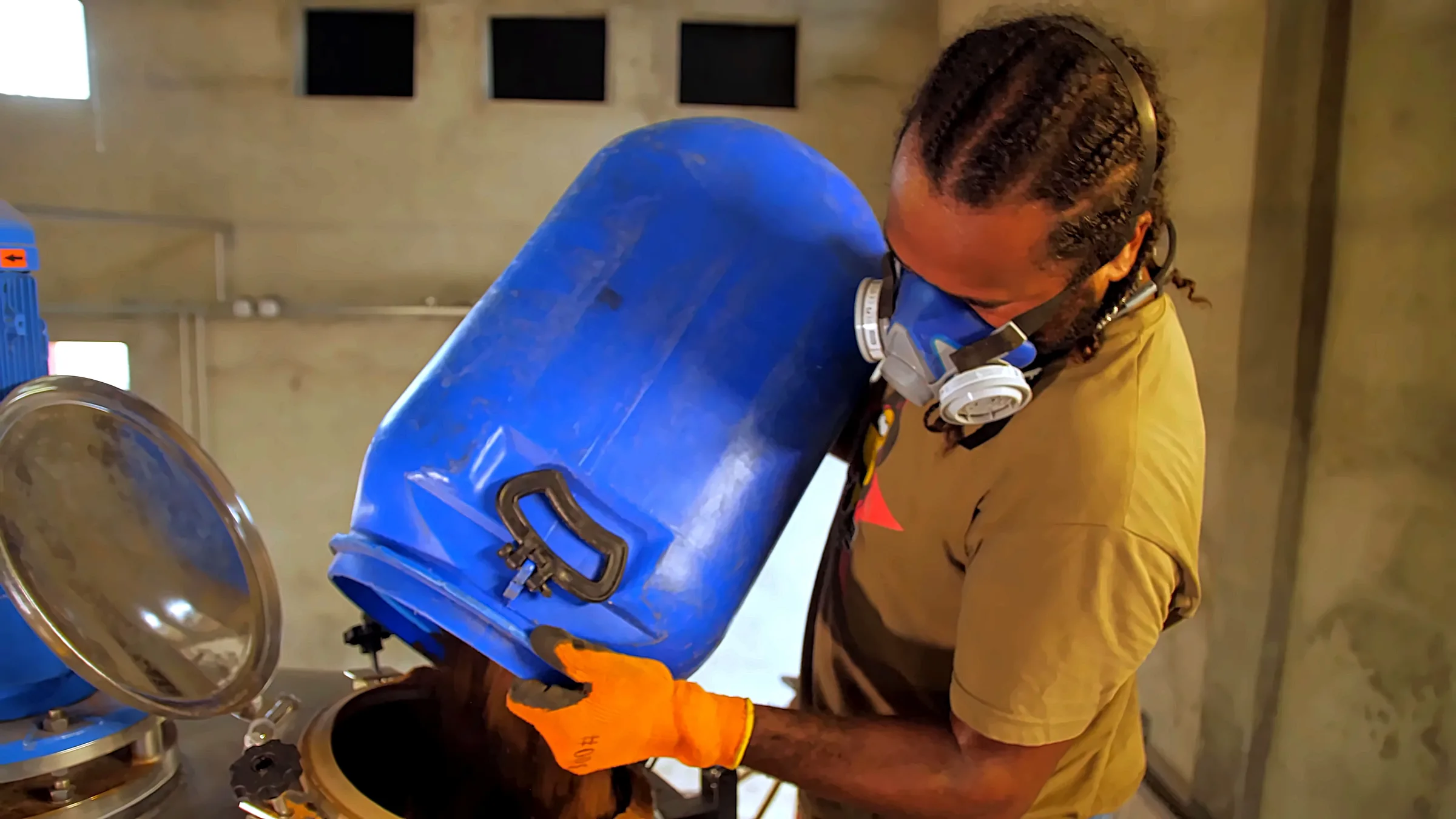
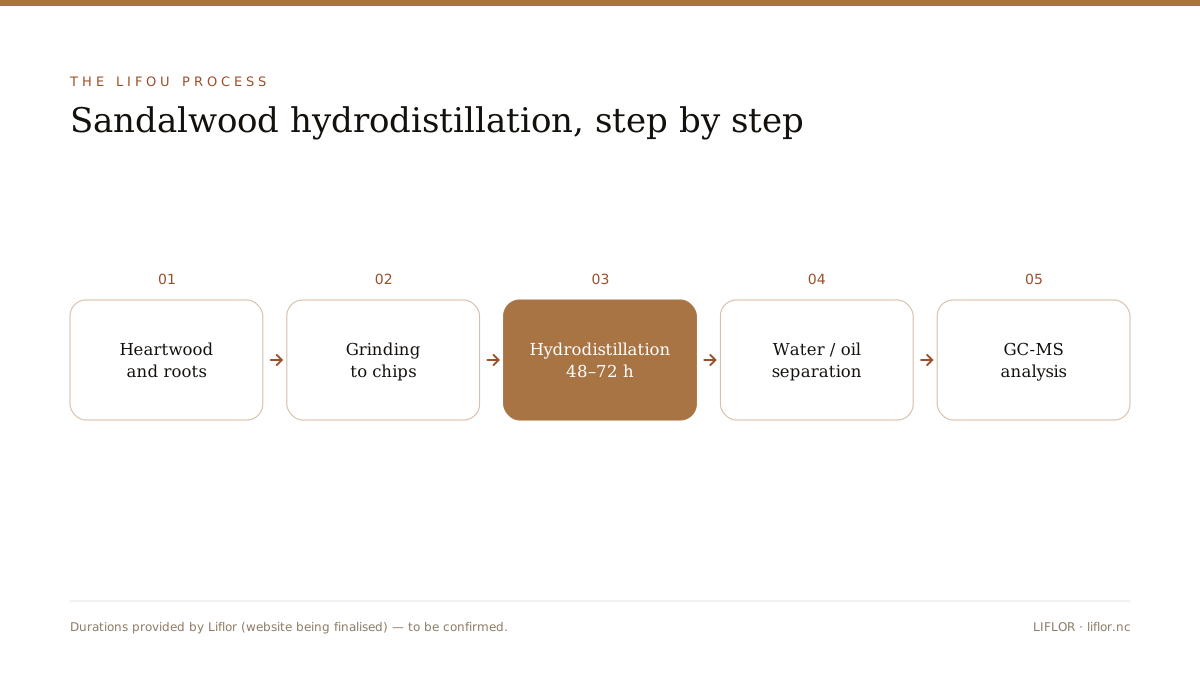
It all begins far from the still. Caledonian sandalwood (Santalum austrocaledonicum) is a slow species: it reaches maturity at around thirty years in the wild, with the best harvest falling between forty and fifty years, according to the sandalwood industry as described by Takone. The distiller cares not for the whole tree but for its heartwood, the duramen, the dark, dense core where the santalols concentrate. The pale outer sapwood holds almost none. The wood is therefore sorted, stripped of its sapwood and ground down: the finer the chips, the greater the surface offered to the steam, and the better the extraction. In New Caledonia this step happens locally by obligation as much as by choice. Since 2015, Outremers360 reports, the export of raw sandalwood wood has been banned, which anchors processing, and therefore distillation, on the territory.
Raw sandalwood wood does not leave New Caledonia: since 2015 its export in unprocessed form has been banned, and the oil must be born on its home ground (Outremers360, 2015).
48 to 72 hours: the run time that shapes the yield
Distilling sandalwood calls for patience. Where lavender gives up its oil in one or two hours, sandalwood demands far longer cycles: Liflor states a hydrodistillation of forty-eight to seventy-two hours, in a distillery that runs continuously, day and night (figures provided by Liflor, website being finalised, to be confirmed). This length is no idle slowness; it is the time the barely volatile santalols need to move from the fibres into the steam. The distiller follows the fractions: the first hours release the lightest notes, the heart of the run carries most of the santalols, and the final cut is judged by experience, by nose and by measurement. The yield from even good wood stays modest, which partly explains the material's value. As a market reference, Indian sandalwood oil trades at around 3,800 to 4,200 USD/kg and the Australian around 1,600 to 2,000 USD/kg, according to Global Growth Insights; the price of Caledonian sandalwood is not public and is shared on request.
What comes out of the still: the profile of Lifou sandalwood
What flows out is a sandalwood with a character all its own. Analyses published by Wikiphyto place the Caledonian chemotype at around 38 to 45% cis-α-santalol and 12 to 17% cis-β-santalol, with lancéol (4 to 13%) and α-bergamotol, giving some 50 to 62% total santalols (figures to be confirmed against the ISO 3518 standard). That is less concentrated than Indian Santalum album, often cited at around 90% santalols, and more than Australian S. spicatum, close to 39%; but comparing percentages alone says nothing of the smell. Lifou sandalwood is described as a dry, ambery, slightly milky wood, a signature perfumers seek in its own right. These levels are detailed in our specifications, and the species is introduced on our Lifou sandalwood page.
From the lab to the ISO standard: measuring sandalwood
How do we know what a batch is worth? Before the main run, a wood sample often passes through a laboratory setup, the Clevenger apparatus, which distils a small mass of chips and lets the oil yield be read directly. Then comes the fine analysis: gas chromatography separates and quantifies the constituents, cis-α-santalol foremost, and draws up the batch's chemical identity card. These results are set against a reference framework, the ISO 3518 standard, which defines the criteria for sandalwood essential oil. The Caledonian chemotype holds its own place there, neither Indian nor Australian, and it is this figures-based reading, backed by the specifications, that reassures a perfume house before committing to a formula.
A world market under strain
This extreme care answers an economic reality. According to Grand View Research, the global sandalwood oil market, valued at 174.4 million USD in 2024, could reach 261.7 million USD in 2030, a yearly rise of about 7%. Yet the resource does not keep the same pace: a review published by Springer puts world demand for Santalum album at 5,000 to 6,000 tonnes a year, while supply stays checked by growth cycles of fifteen to twenty years and more. In this setting of lasting scarcity, a Pacific sandalwood that is traceable, harvested under quota and distilled on its home ground gains a value beyond its scent alone. Provenance becomes an argument as much as a fragrance.
A market valued at 174.4 million USD in 2024, projected towards 261.7 million by 2030: demand for sandalwood rises while the resource itself is counted in decades (Grand View Research, 2024).
The Kanak custom that frames the distillation
Distillation cannot be understood apart from the framework that makes it possible. In the Loyalty Islands, sandalwood grows not on ordinary farmland but on Kanak customary land, and its cutting follows strict rules: the Islands Province governs harvesting through deliberation no. 2010-71/API of 19 August 2010, with annual quotas and a resource inventory revised roughly every ten years (ERPA). Every tree harvested carries a duty to replant, three trees planted for one cut, together with a cutting certificate, under the forestry standard documented by FSC. The wood is bought from customary owners at around 1,000 F CFP a kilo, according to Liflor's figures (to be confirmed). This grounding is more than administrative: the Lifou house, a wholly Kanak-owned company based in Xépénéhé (the Drehu spelling of Chépénéhé), has partnered with LMR Naturals by IFF since 2017 and is certified ECOCERT For Life, a responsible-sourcing standard. The chieftaincy's formal agreement on the arrangements is still being finalised, and the approach respects that timeline. This framework is set out on our sustainability page.
Sandalwood in perfumery: a base note
What, exactly, is this oil born of so much patience used for? In perfumery, sandalwood takes the place of a base note. Its low volatility, the very trait that stretches the distillation, makes it a remarkable fixative: it holds the lighter molecules of a composition beneath it and lengthens the trail long after the top notes have faded. Creators prize its woody roundness, able to melt a flower, soften a leather accord or lend backbone to an ambery base. Lifou sandalwood, described as dry, ambery and slightly milky, brings this signature without the heaviness sometimes ascribed to more opulent sandalwoods.
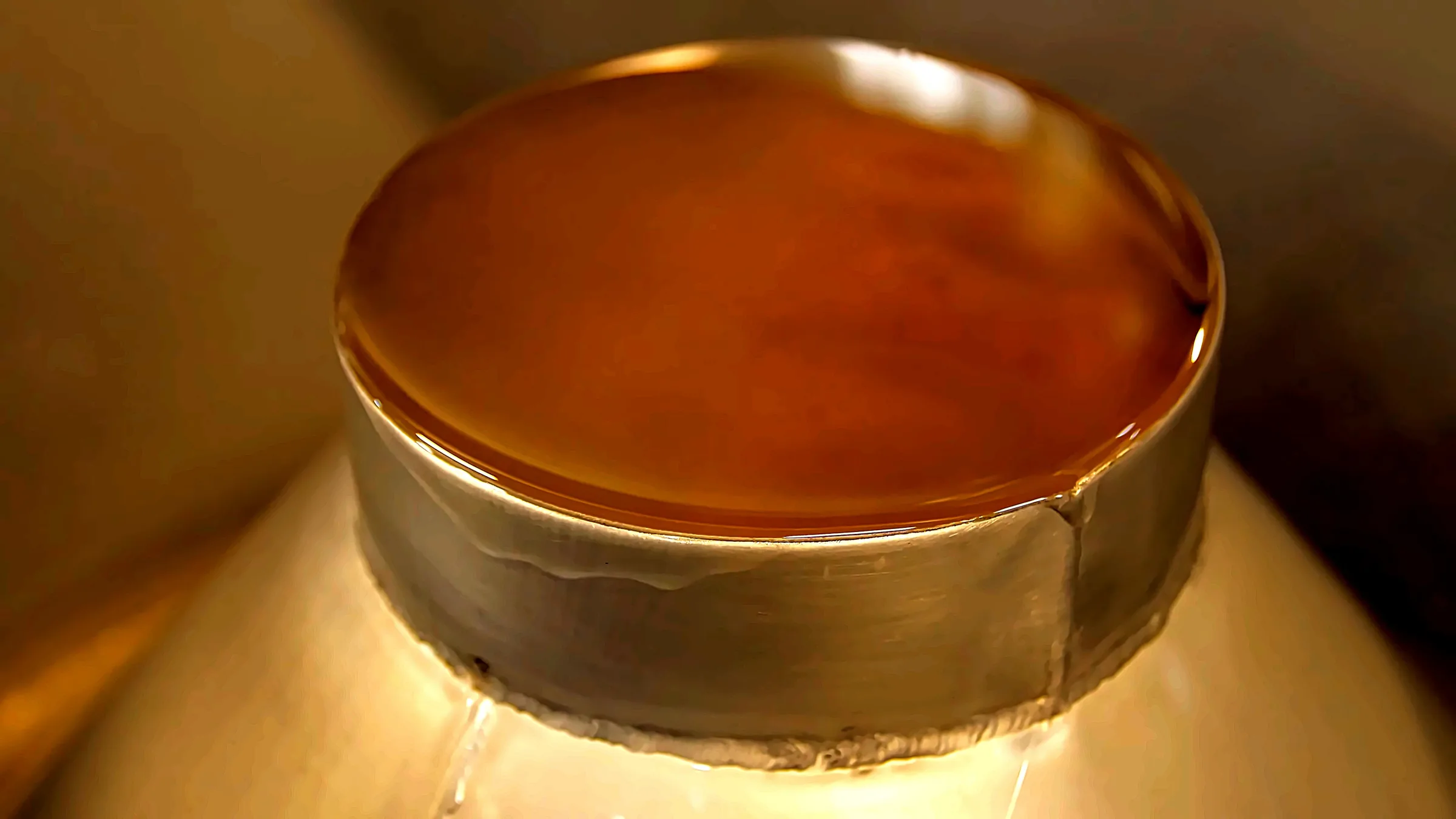
The oil is not the coil's only treasure. The hydrosol, that floral water gathered beneath the oil, keeps a fraction of the aromatic compounds in suspension; quiet and woody, it finds a use in cosmetics and in the making of mists or scented bases. Valuing it, rather than discarding it, extends the logic of a terroir that wastes nothing. The species and its uses are detailed on the Lifou sandalwood page.
One terroir, two harvests
Sandalwood is not the only crop on Lifou's land. The house also harvests the island's vanilla, born of the same coral soil and the same patience. The Loyalty Islands produced about 4.6 tonnes of green vanilla in 2025, against nearly 3 tonnes in 2017, with Lifou alone supplying some 60%, according to La 1ère. To bring together under one roof a wood counted in decades and a vine picked each season says something about this place: a customary economy that works with the long term as with the rhythm of the year. You will find that balance in the sustainable management of the resource.
Frequently asked questions
What is hydrodistillation?
It is an extraction method in which plant material, here sandalwood chips, is immersed in the water of a still brought to the boil. The steam carries the aromatic molecules, condenses in a cooled coil, and the essential oil then separates from the water by density. For a dense wood, this direct contact with water eases the extraction of heavy molecules.
How long does sandalwood hydrodistillation take?
Far longer than for a flowering plant. Liflor indicates a distillation of 48 to 72 hours, running continuously (figure to be confirmed, website being finalised). The length is due to the low volatility of santalols, which must slowly move from the wood fibres into the steam.
What is the difference between hydrodistillation and steam distillation?
In hydrodistillation, the material sits directly in the boiling water of the still. In steam distillation, steam is produced by a separate boiler and passes through the material without immersing it. Both capture volatile molecules; the choice depends on the material and the aromatic result sought.
Where is Lifou sandalwood distilled?
On Lifou itself, in the Loyalty Islands, in the tribe of Xépénéhé (Wetr district), on its home ground. Harvesting and distillation take place on site, reinforced by the ban on exporting raw wood from New Caledonia.
What is a Clevenger apparatus?
It is a laboratory device that reproduces hydrodistillation on a small scale: a sample of chips is distilled to measure the essential-oil yield directly. It serves as a check before or after industrial distillation, alongside analysis by chromatography.
Is sandalwood distilled like lavender?
The principle is the same, but not the duration. Lavender, a flowering plant, gives up its oil in one or two hours; a dense wood like sandalwood needs 48 to 72 hours (Liflor figure, to be confirmed), because its barely volatile santalols move slowly from the fibres into the steam.
Lifou sandalwood, then, is not merely a scent: it is the result of patient wood, a still tended for days on end and a territory that keeps control of its resource. For perfume houses, that traceability is part of the material as much as the santalols themselves.
Sourcing Caledonian sandalwood for a project? Talk to the distillery.
Request a quote