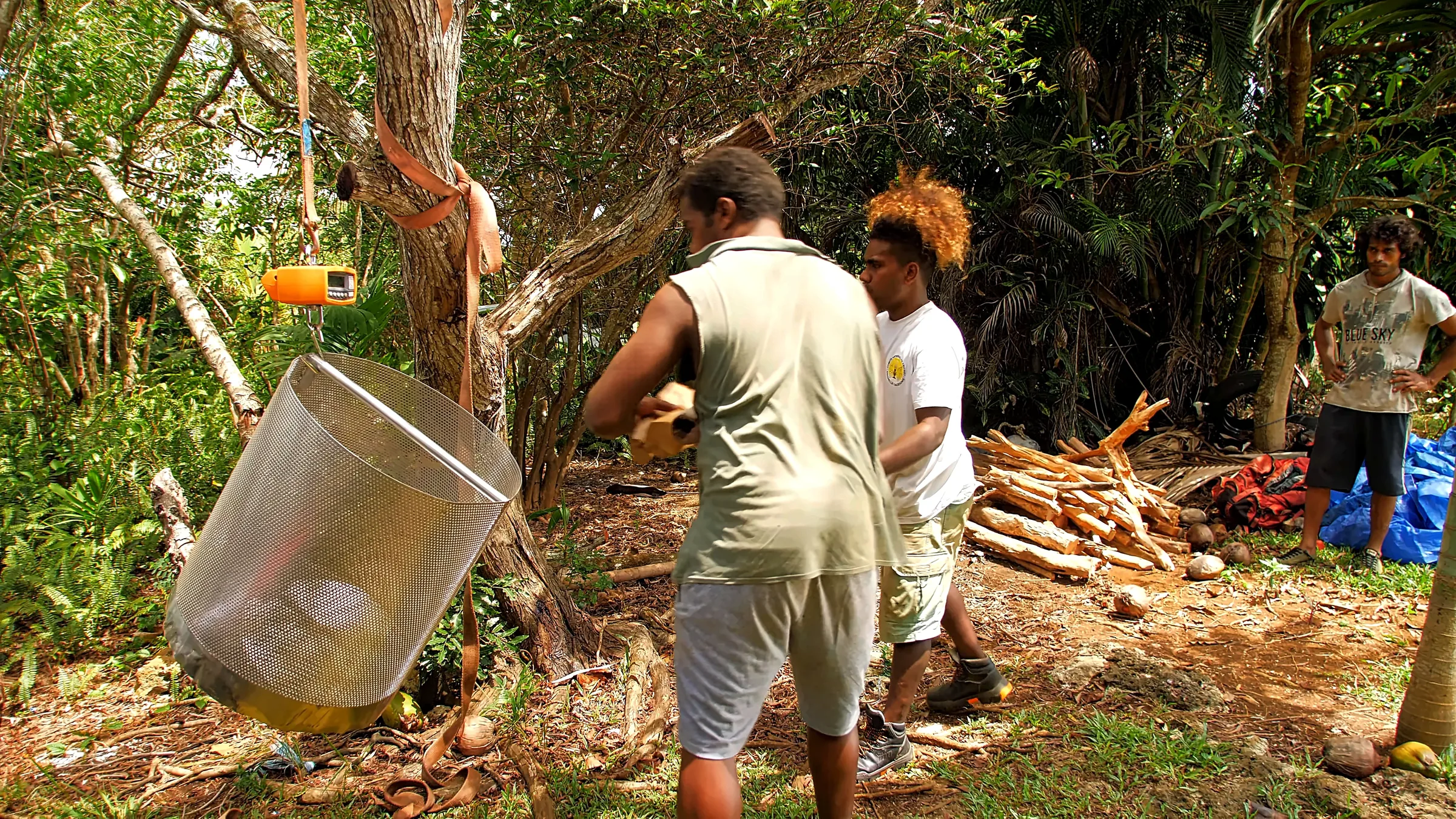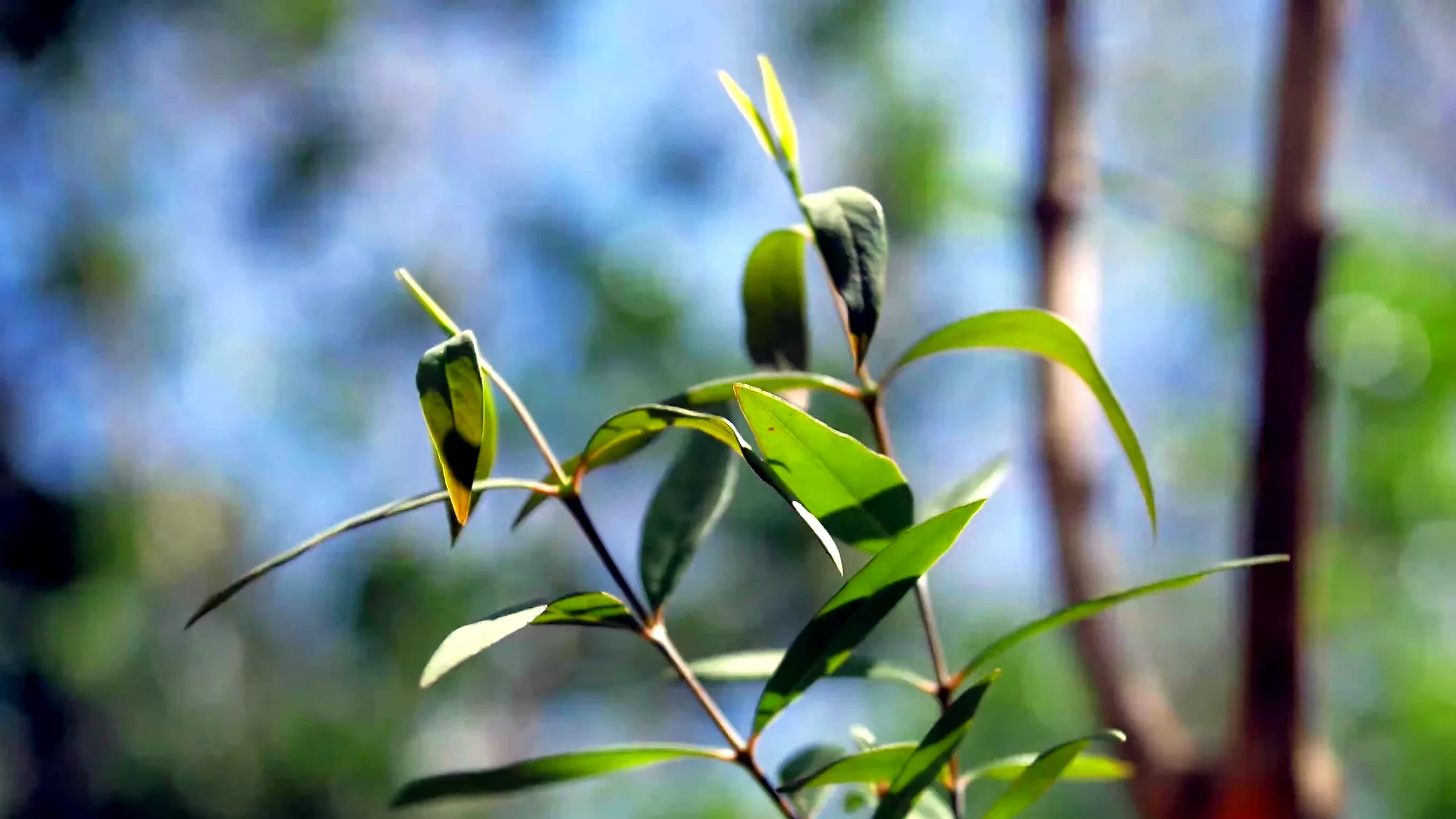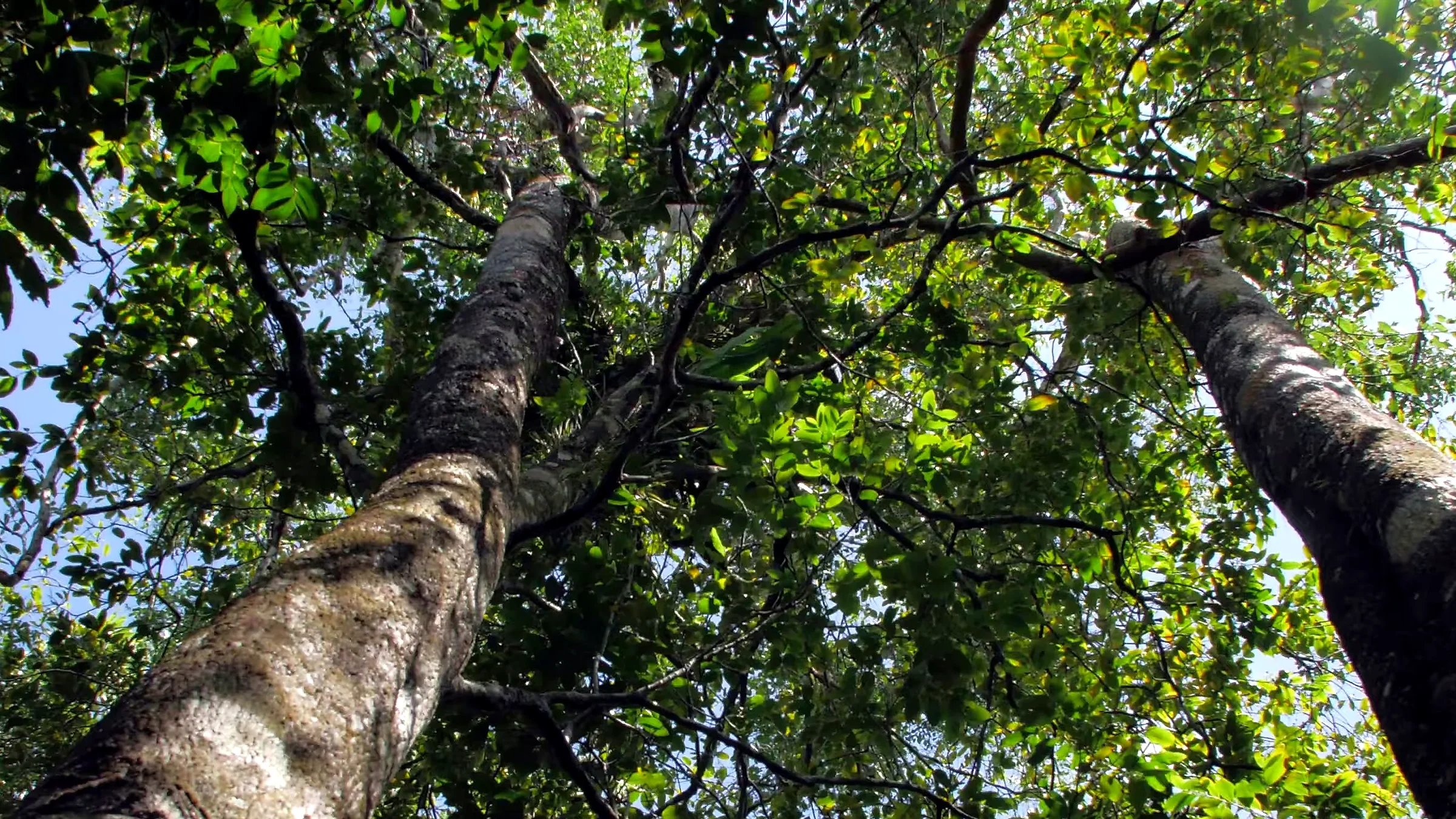
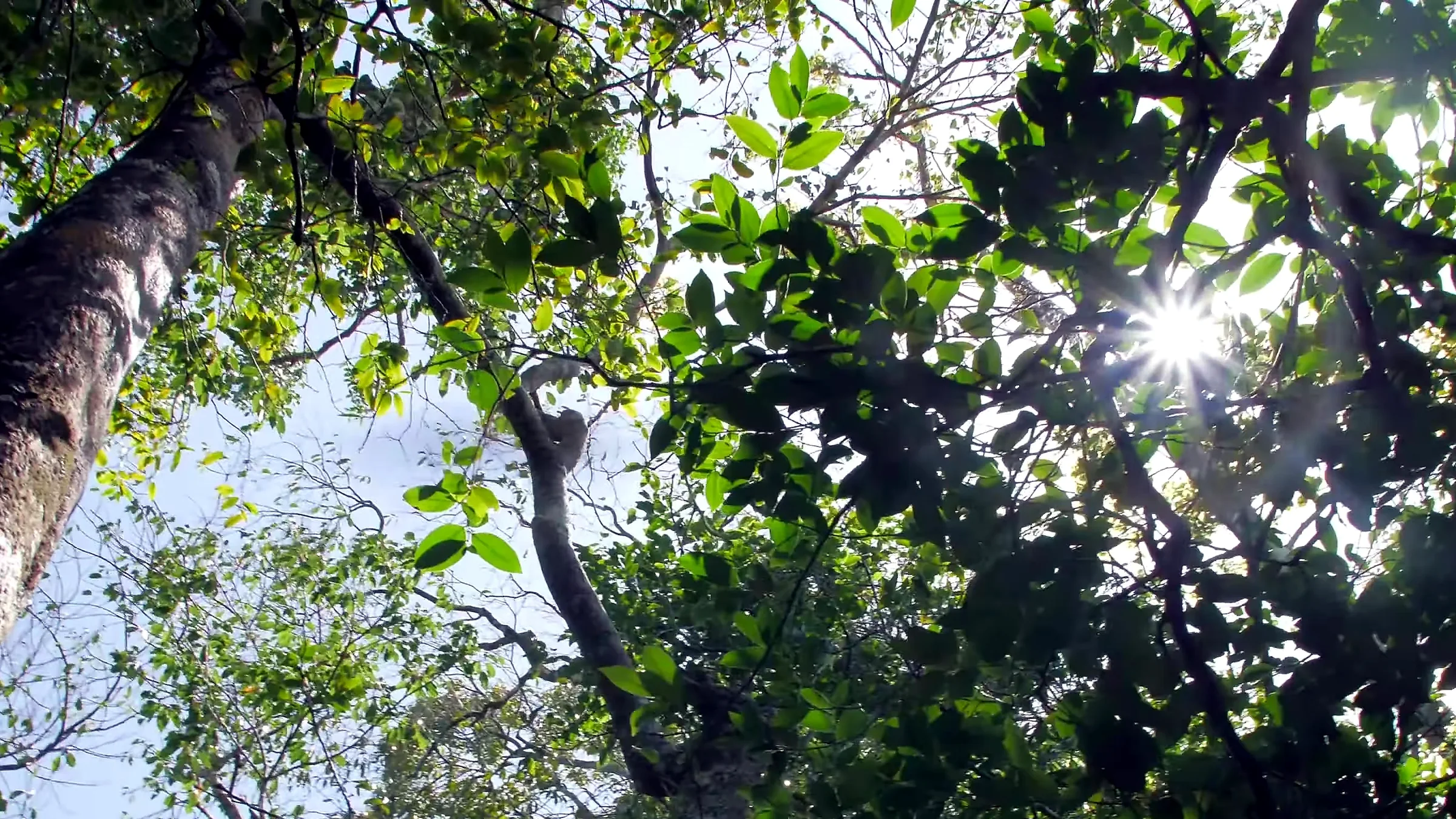
Sustainable sandalwood management in the Loyalty Islands is not a marketing line. The phrase covers a concrete framework: annual harvesting quotas set by the Loyalty Islands Province, a replanting obligation, and Kanak customary law that governs access to the resource. For a fragrance house, this framework is the proof that an essential oil comes from a forest that is managed, inventoried and renewed, rather than from an opportunistic cut.
A slow resource that demands decades of patience
Sandalwood is nothing like an annual aromatic crop. According to the Caledonian industry as documented by Takone, a Santalum austrocaledonicum tree reaches maturity only at around thirty years in the wild; in plantation, fifteen to twenty-five years pass before a first cut, and the heartwood is at its best between forty and fifty years. That slowness explains the strain on the market. A 2024 analysis published by Springer puts world demand for Indian sandalwood (Santalum album) at roughly five to six thousand tonnes a year, against a supply constrained by growth cycles of fifteen to twenty years and more. The global sandalwood oil market, valued at 174.4 million US dollars in 2024 by Grand View Research, is expected to reach 261.7 million by 2030, annual growth of about seven percent. A tree felled too early yields little of the santalols that give sandalwood oil its worth, so durability is not merely an ethical stance: it shapes the resource itself.
An endemic chemotype that sustainable management preserves
A sandalwood's worth shows first in its composition. The Santalum austrocaledonicum of the Loyalty Islands carries a chemotype of its own, distinct from both Indian sandalwood (Santalum album) and Australian sandalwood (Santalum spicatum). According to Wikiphyto — a profile still to be confirmed against the ISO 3518 standard — its essential oil brings together roughly 38 to 45 percent cis-α-santalol, 12 to 17 percent cis-β-santalol, 4 to 13 percent lanceol and 3 to 8 percent α-bergamotol, for a total santalol content near 50 to 62 percent. By way of comparison, album sandalwood peaks at around 90 percent santalols, while the Caledonian species sits between 51 and 65 percent and the Australian one near 39 percent, according to figures gathered by Wikipedia from the ISO 3518 standard. These molecules form only in the heartwood of a tree that has reached maturity: to cut too early is to thin the signature. By demanding patience, sustainable management protects the very thing that makes a fine-fragrance sandalwood.
Sustainable sandalwood management in the Loyalty Islands: quotas and felling certificates
The legal framework is neither recent nor vague. Deliberation No. 2010-71/API of 19 August 2010, listed by the ERPA, governs the cutting and exploitation of sandalwood: it sets annual quotas and provides for a resource inventory roughly every ten years. In practice, the resource may be worked in only two areas, the Loyalty Islands and the Isle of Pines, as Outremers360 noted in 2015. Every harvest carries a felling certificate, a document that ties a batch of wood to an authorised plot. It is this administrative traceability that separates regulated sandalwood from wood of uncertain origin, and that underpins the industry's guarantees.
The ten-year inventory: measuring the forest before setting quotas
How does anyone know how many trees it is reasonable to fell? The method rests on observation before exploitation. Deliberation No. 2010-71/API of 19 August 2010, listed by the ERPA, provides for a resource inventory conducted roughly every ten years, on which the annual quotas are then based. Counting the stands, estimating their age and health, and authorising for cutting only a fraction of the measured capital: the approach is patient silviculture rather than harvesting on demand. It makes full sense on a deliberately narrow range, since the resource may be worked only in the Loyalty Islands and on the Isle of Pines, as Outremers360 recalled in 2015. A quota is therefore never an arbitrary figure: it expresses the gap between what the forest holds and what it can give up without being depleted. This counting discipline, invisible in the final bottle, is nonetheless what allows anyone to speak of a resource administered over the long term.
The rule of three trees planted for one cut
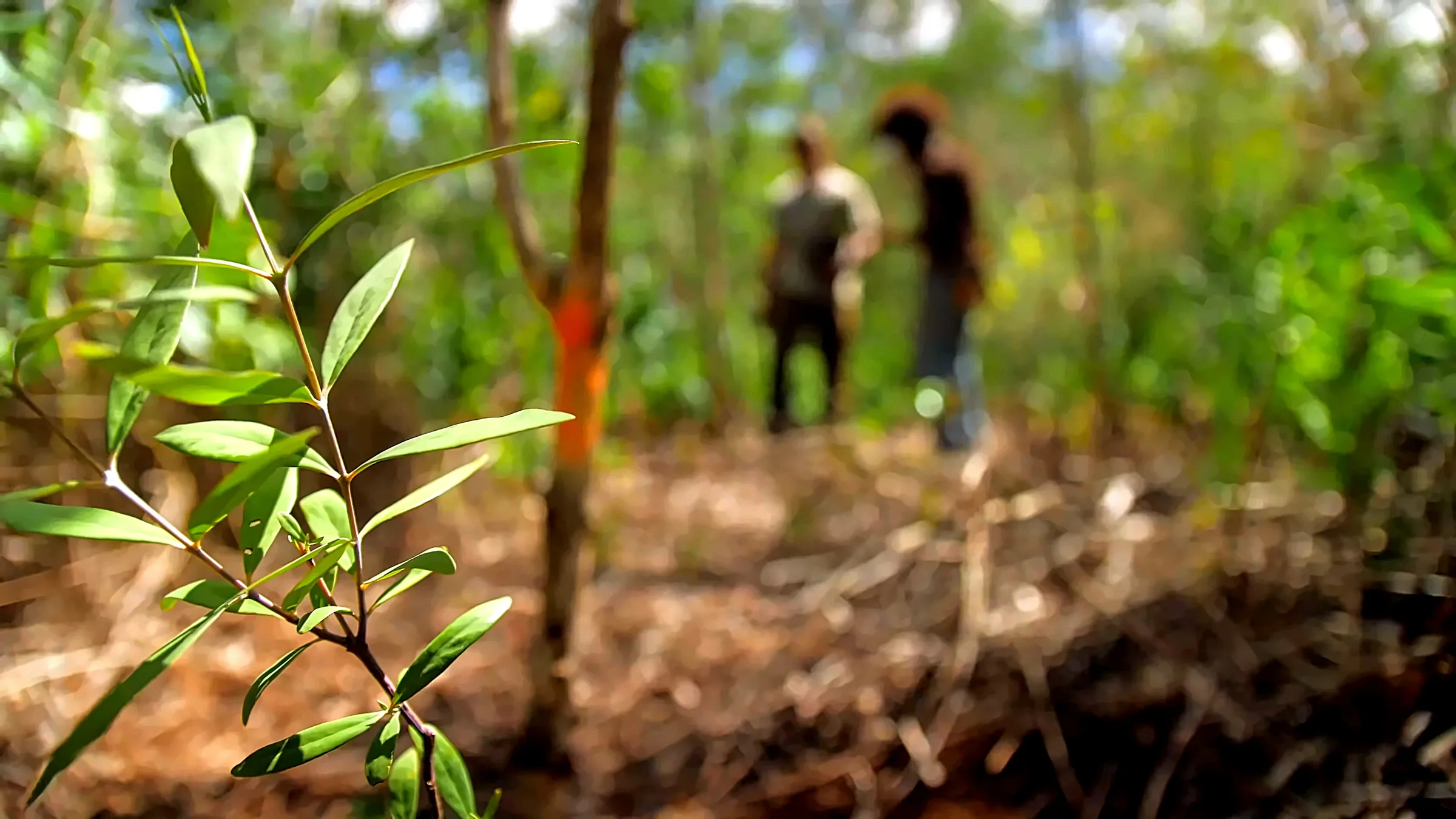
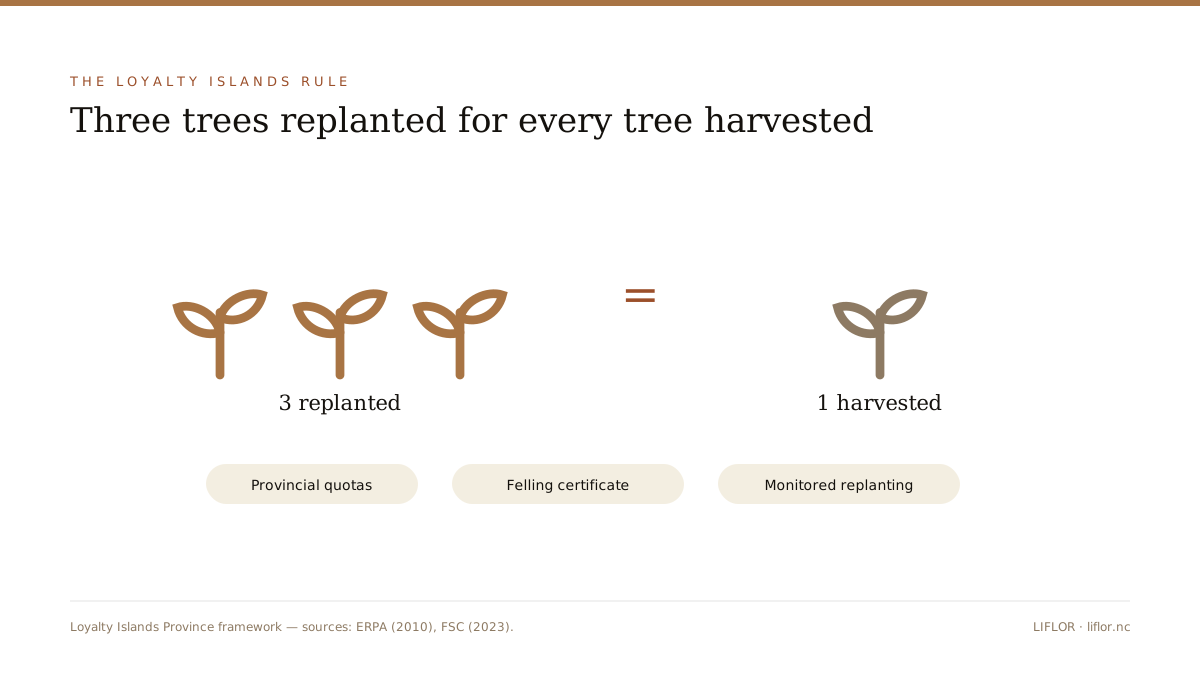
On top of quotas comes an obligation to renew. The forestry standard adapted to the Loyalty Islands requires, according to FSC (2023), three sandalwood trees to be planted for every tree cut. The rule sounds simple; in truth it commits growers across decades, since the replanted trees will only be harvestable by the next generation. The Lifou industry began its plantings in 2020, according to IFF. Replanting more than you fell, on so slow a species, means building forest capital instead of drawing it down.
- Annual felling quotas set by the Loyalty Islands Province
- A felling certificate linking each batch to an authorised plot
- Three sandalwood trees replanted for every tree felled
In the Loyalty Islands, three sandalwood trees must be planted for every tree cut, under a felling certificate — a requirement written into the forestry standard (FSC, 2023).
Kanak customary law at the heart of stewardship
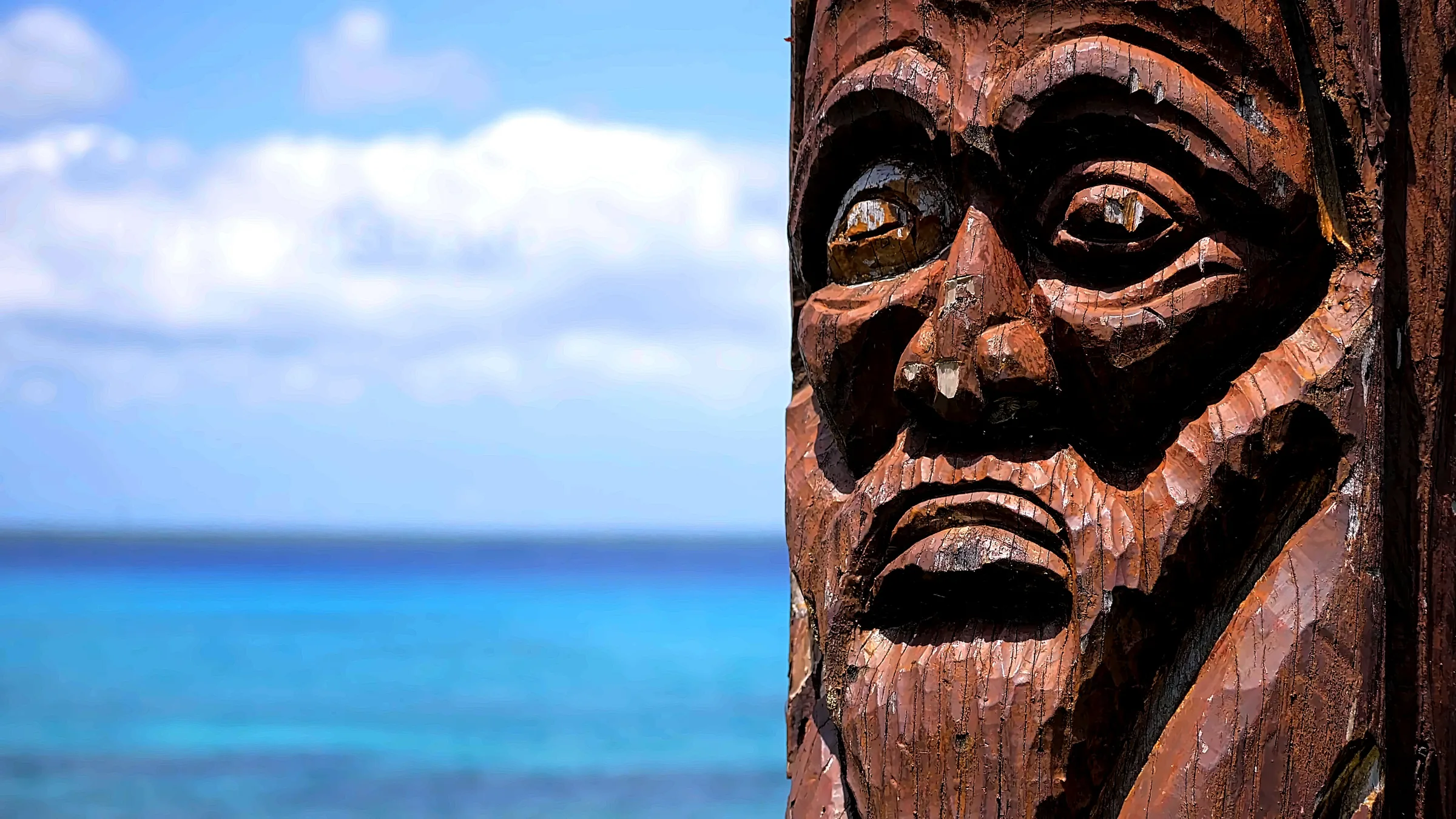
In the Loyalty Islands, the land and its resources belong to the customary domain. Access to sandalwood stands is not merely an administrative permit: it runs through the chieftaincy and the clans that hold the land. This Kanak customary governance, where the spoken word and respect count more than a written contract, decides in practice who may cut, where and how much. The Lifou sandalwood operation is run by a wholly Kanak-owned company, according to IFF, which roots the harvesting decision in the community that lives on site. Agreements with the chieftaincy are still being formalised, a reminder that here, sustainability is social before it is a label.
Sandalwood, one income among several for the tribe
To reduce Lifou to its sandalwood would be to misread its terroir. On the same customary land thrives another exceptional crop: vanilla. The Loyalty Islands produced about 4.6 tonnes of green vanilla in 2025, against nearly three tonnes in 2017, with Lifou alone accounting for some 60 percent, according to La 1ère. Sandalwood and vanilla trace a tribal economy where several harvests complement one another through the seasons, never resting on a single resource. That diversity matters as much as the quotas: it eases the pressure on the tree, for a community that also lives from its vanilla is not forced to over-harvest its sandalwood to get by. To harvest, distil and sell on site is also to keep a fabric of know-how alive — planters, cutters, distillers — within the Wetr district. Sandalwood is no export monoculture; it belongs to a balance patiently held between the land, custom and the long span of time.
Transforming on the island, keeping the value
Caledonian regulation does more than cap volumes: it protects local added value. The export of raw sandalwood wood is banned, and that of the spent charge (the distillation residue) remains restricted, according to Outremers360 (2015). In other words, the wood must be processed on the territory before it leaves. For an endemic resource, this keeps the wealth from evaporating off the archipelago. Stewardship has been matched by forestry recognition: on Maré, close to 58,000 hectares earned FSC certification, a process launched in 2018, validated in 2021 and certified in November 2022. Together these elements describe an industry that plans its resource in decades, and that Liflor writes into its sustainability policy.
For Life: what the label actually certifies
The two names look so alike that they are wrongly taken for one. According to ECOCERT, the original programme was split in 2017: the For Life standard attests to a commitment to social responsibility and responsible sourcing, while the organisation's fair-trade programme is a separate standard. Liflor is For Life certified — a distinction that matters to a buyer who must document guarantees precisely. The label does not replace the provincial quotas or the felling certificate: it layers on top of them, auditing the social and environmental conditions of production. The recognition carries weight with the great houses too: the Lifou operation has partnered with LMR Naturals by IFF since 2017, a collaboration itself placed under a For Life approach, according to IFF. For a fine-fragrance brand, holding an ingredient that is at once regulated, certified and traced is no longer a nicety: it is a condition for entering the specification.
Since the 2017 split, For Life certifies social responsibility and responsible sourcing, while le volet commerce équitable d'ECOCERT targets fair trade (ECOCERT). Liflor holds the For Life standard.
Tracing the chain: the documents a house can audit
A guarantee is only worth what can be checked. The strength of the Caledonian framework lies in the way each link leaves a written trace, from the drum of oil back to the plot. A methodical buyer can ask to cross-check the documents one by one, then set the declared volumes against the year's quotas and the area worked. The price of the raw material follows this demand for traceability too: sandalwood wood trades at around 1,000 F CFP a kilo, according to figures shared by Liflor — an order of magnitude to be confirmed, so much do prices vary with heartwood quality. What is at stake, in the end, is not only paperwork: it is the ability to answer, without evasion, the question every responsible brand now asks — where exactly does this tree come from, and who decided to cut it?
- The felling certificate linking the batch to an authorised plot
- The annual quotas set by the Loyalty Islands Province
- The ECOCERT For Life certification statement
- The replanting record (three trees for every one cut)
For a fine-fragrance buyer, this web of rules answers a demand that has become non-negotiable: proving the origin and management of a natural ingredient. Provincial quotas, felling certificates, replanting, customary governance and ECOCERT For Life certification form a coherent compliance file that can be checked piece by piece. The scarcity of Caledonian sandalwood owes as much to the rigour of its stewardship as to its botanical slowness.
Frequently asked questions
Is Loyalty Islands sandalwood a sustainable resource?
Yes, within a regulated framework. The Loyalty Islands Province sets annual harvesting quotas, requires a felling certificate for every batch and mandates replanting three trees for each one cut, according to FSC (2023). A resource inventory is carried out roughly every ten years, per the ERPA.
How many sandalwood trees must be replanted for one tree cut?
Three. The forestry standard applied in the Loyalty Islands requires three sandalwood trees to be planted for every tree cut, according to FSC (2023). Because the tree takes several decades to mature, this rule builds forest capital for future generations rather than simply replacing what is felled.
Where can sandalwood be harvested in New Caledonia?
The resource may be worked in only two areas, the Loyalty Islands and the Isle of Pines, according to Outremers360 (2015). Exporting raw wood is banned there: the sandalwood must be processed on the territory before any shipment, which protects local added value.
Is Liflor's sandalwood certified?
Yes. Liflor is ECOCERT For Life certified and works under the Loyalty Islands Province quotas, in Kanak customary stewardship. The Lifou industry has also partnered with LMR Naturals by IFF since 2017, according to IFF, a mark of compliance with fine-fragrance standards.
Is Caledonian sandalwood the same as Mysore sandalwood?
No. Loyalty Islands sandalwood is the endemic species Santalum austrocaledonicum, distinct from Indian sandalwood Santalum album (Mysore) and Australian sandalwood Santalum spicatum. Its santalol content sits between 51 and 65 percent, against about 90 percent for album sandalwood and 39 percent for the Australian one, according to figures gathered from the ISO 3518 standard (to be confirmed against a primary source).
What exactly does the For Life label certify?
According to ECOCERT, the programme was split in 2017: For Life certifies social responsibility and responsible sourcing, while the organisation's fair-trade programme is a separate standard. Liflor is For Life certified.
Houses that wish to audit this chain of guarantees — certificates, quotas, the For Life standard — can request a sample and a quote and trace it, piece by piece, back to the plot of origin.
Sourcing Caledonian sandalwood for a project? Talk to the distillery.
Request a quote