Why sandalwood stays expensive in 2026
Sandalwood essential oil price ranks among the highest on a perfumer's palette, and nothing in 2026 points to real relief. This is not a passing trend. It is an old, almost geological equation: steady demand, a supply constrained by the very biology of the tree, and a regulatory framework that tightens year after year. Grasp that tension and you understand why an endemic, legal and traceable origin such as Lifou holds a place of its own on this market.
The global sandalwood oil market was valued at 174.4 million US dollars in 2024 and could approach 261.7 million by 2030, an annual growth of roughly 7%, according to Grand View Research. That rise, steady rather than spectacular, says a great deal: it reflects structural demand, not a passing spike. Three outlets compete for the material — fine fragrance, cosmetics and aromatherapy — yet the available volume does not follow the same curve. Sandalwood is, first and foremost, a precious wood whose value is built over the long term, against every logic of fast production.
174.4 million US dollars in 2024, 261.7 million expected by 2030: the global sandalwood oil market grows by about 7% a year, while the tree itself takes several decades to mature. — Grand View Research
Time, the first cost driver: decades before the first drop
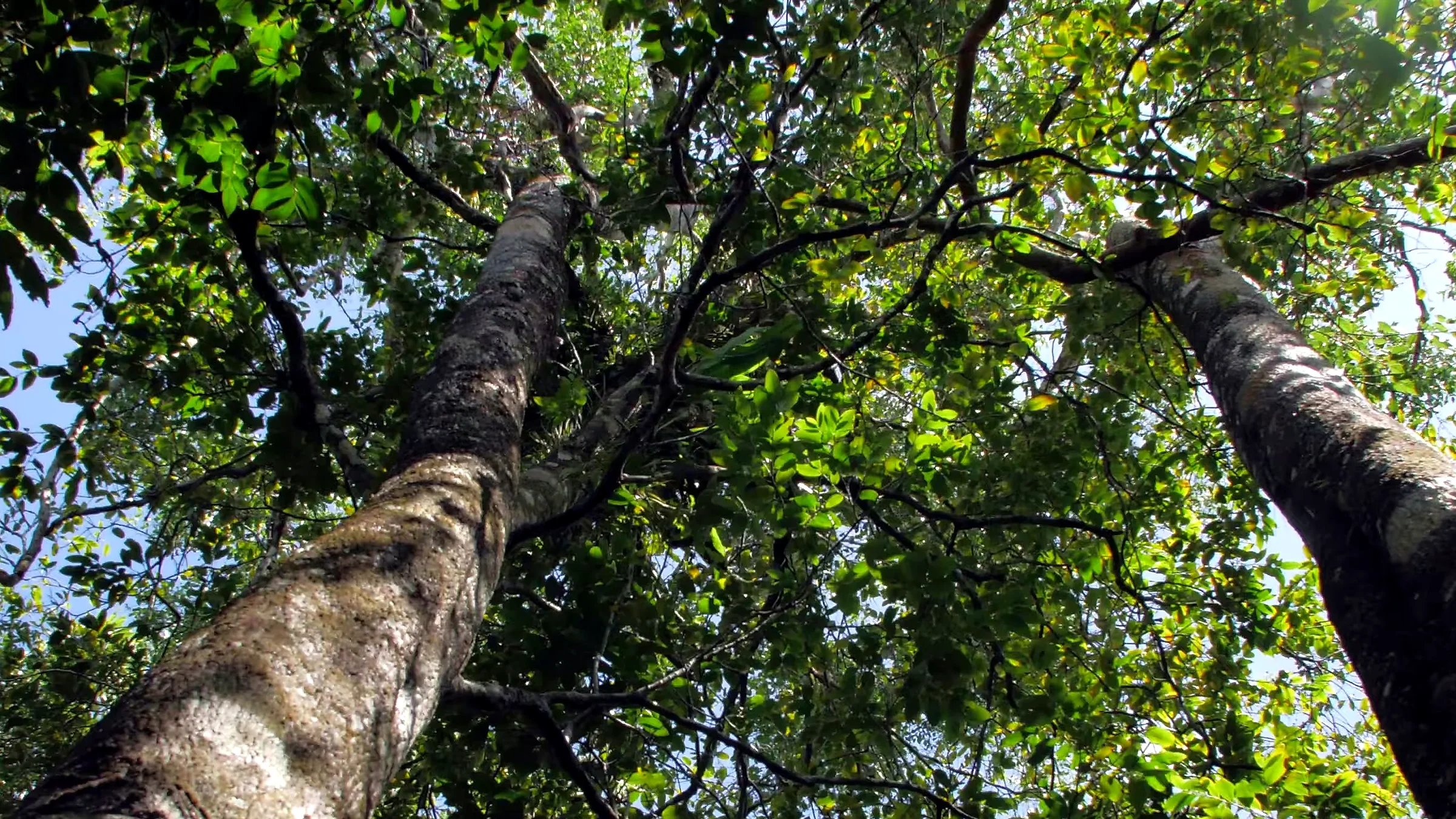
Sandalwood's distinctiveness lies in its pace. Where most aromatic plants are harvested within a single season, Santalum only reaches maturity after several decades. According to figures from the New Caledonian industry (Takone), a tree is not workable before about thirty years in the wild; under cultivation the range narrows to fifteen to twenty-five years, and the finest aromatic richness often appears only between forty and fifty years. Every kilo of oil therefore carries a time-capital that no industrial process can shorten.
To this biological slowness a deliberately strict management is added. In the Loyalty Islands, harvesting is subject to annual quotas and a felling certificate, and every operation requires three trees to be replanted for each one cut, under the FSC forestry standard. Deliberation No. 2010-71/API of 19 August 2010 governs the activity, with a resource inventory carried out roughly every ten years (ERPA). These rules protect the species; they also mechanically limit the volumes that reach the market.
Distillation, the last costly link before the bottle
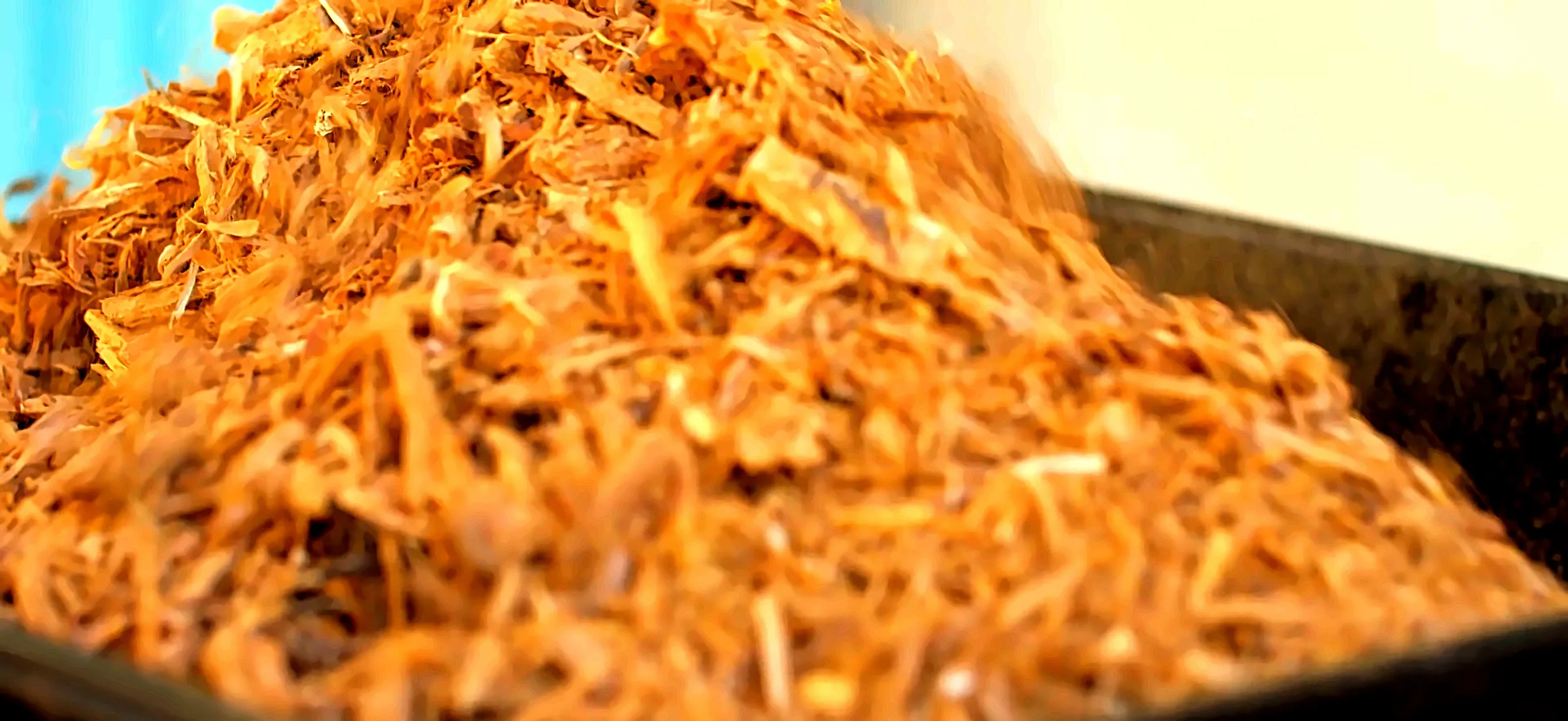
Once the tree is felled, the price keeps climbing. Sandalwood does not surrender its scent to a simple press: the heartwood must be reduced to chips, then subjected to a long, patient, energy-hungry hydrodistillation. According to the first figures published by Liflor, this stage stretches over forty-eight to seventy-two hours, on a still that runs without a break. Every cycle draws on water, heat and constant watchfulness to protect the most fragile santalols, the ones that carry the base note. Carried out on site, at Lifou, this distillation outsources neither the labour nor the added value: it anchors them to the terroir, yet it has a cost, and that cost shows right up to the final quote.
Forty-eight to seventy-two hours of hydrodistillation, a still that never stops: sandalwood's scent is won slowly, through heat and water. — Liflor figures
Sandalwood essential oil price by origin: how much per kilo?
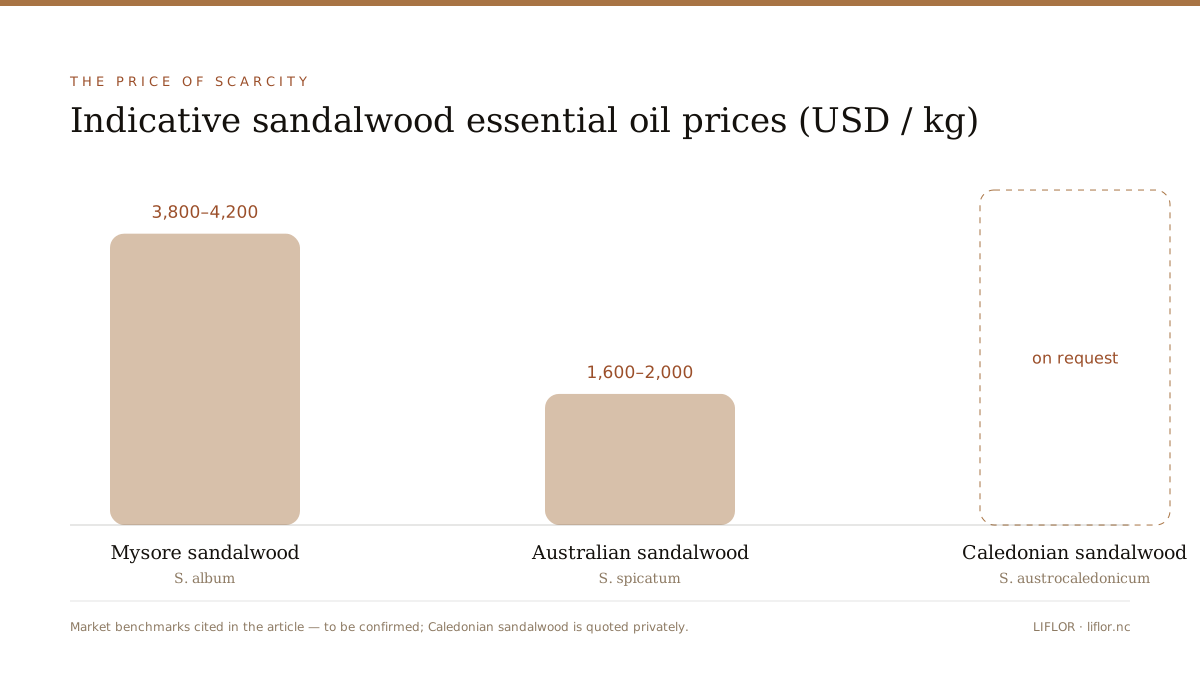
Prices vary sharply from one species to another. As a benchmark, and subject to cross-checking, Indian sandalwood oil — the celebrated white sandalwood, Santalum album — reportedly trades between 3,800 and 4,200 dollars a kilo, against 1,600 to 2,000 dollars for Australian sandalwood (S. spicatum), according to Global Growth Insights. Caledonian sandalwood (Santalum austrocaledonicum) has no public price: it is quoted privately, on request, by lot and volume. At equal origin, santalol content and distillation method then make the difference. Our origins comparison sets out the contents and profiles of each.
- Indian, or white, sandalwood (S. album): about 3,800 to 4,200 USD/kg, the highest santalol content (Global Growth Insights, to be cross-checked).
- Australian sandalwood (S. spicatum): about 1,600 to 2,000 USD/kg, a drier profile and wider availability.
- Caledonian sandalwood (S. austrocaledonicum): price on request, an endemic species with limited volumes.
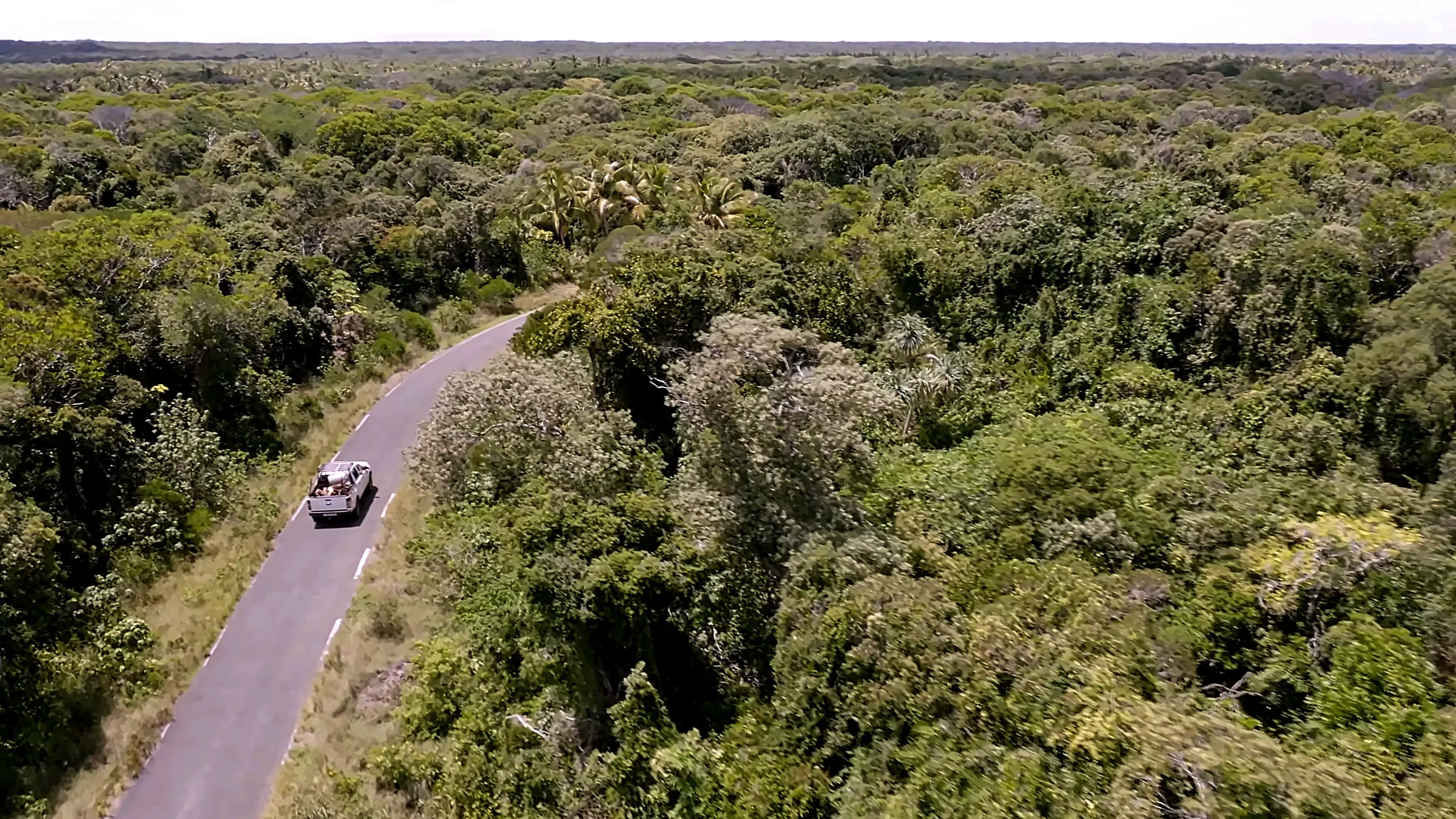
On its home ground the material keeps a clear value: sandalwood reportedly changes hands at around 1,000 XPF per kilo, based on the first figures published by Liflor. Because the export of raw sandalwood is banned in New Caledonia (Outremers360), it is distillation — the real added value — that stays on the archipelago. That is what sets the Caledonian model apart from a mere extraction of raw material shipped elsewhere.
What santalol content changes about the price
Behind the word "sandalwood" hides a figure that governs everything: santalol content, the odorous molecules that carry the woody, creamy, tenacious note. The higher it runs, the more the oil fixes and diffuses — and the more it costs. Indian sandalwood peaks at around 90%, while Australian sandalwood tops out near 39%; Caledonian sandalwood sits between 51 and 65%, according to the figures reported by Wikipedia against the ISO 3518 standard, subject to confirmation from a primary source. The price gap between species is therefore anything but arbitrary: it partly mirrors this hierarchy of aromatic richness.
The detail of the Caledonian chemotype sharpens the reading further. The analyses gathered by Wikiphyto give, for Santalum austrocaledonicum, a cis-α-santalol between 38 and 45%, a cis-β-santalol between 12 and 17%, rounded out by lanceol and α-bergamotol — that is, total santalols in the order of 50 to 62%, subject to ISO 3518 confirmation. This profile, drier and more mineral than that of Mysore sandalwood, does not compare term for term: it holds a signature of its own, and it is this singularity, as much as scarcity, that grounds its value. The species-by-species comparison sets these contents side by side.
Legal scarcity: why a traceable origin becomes strategic
The sandalwood shortage is not only a matter of biology; it is also legal. International trade in the species is closely watched, uncontrolled origins are thinning out, and luxury houses now demand full traceability. Compliance requirements — traceability, respect for the Nagoya Protocol on access to genetic resources — have tightened across the whole industry. In New Caledonia the workable resource is concentrated in the Loyalty Islands and the Isle of Pines (Outremers360), on a species found nowhere else. Far from a handicap, this scarcity turns every lot into an identifiable material, from the foot of the tree to the drum.
This is exactly what fine fragrance is looking for: a sustainable, certified origin, backed by Kanak customary governance and verified standards. The partnership formed as early as 2017 between the Lifou industry and LMR Naturals by IFF, extended by plantings under way since 2020 (IFF), illustrates this shift towards documented, compliant supply chains. For Life certification seals that commitment.
Fragrance, cosmetics, base note: what the demand rests on
If the market absorbs every kilo without flinching, it is because sandalwood fills a role that no synthetic molecule quite reproduces. In perfumery it acts as a fixative: set as a base note, it lengthens the trail, rounds out compositions and gives them that woody depth noses have sought for centuries. Fine fragrance makes it a signature ingredient, cosmetics use it for its hold and its soft scent, and aromatherapy forms the sector's third outlet. Three uses, one material — and direct competition for volumes that, for their part, do not stretch.
This demand explains why houses accept prices unlike those of any other woody material. A perfumer thinks not by the kilo but by the drop: a few grams are enough to structure a formula, and the consistency of an origin often matters more than its entry price. An endemic material, distilled on site and traced from the foot of the tree to the drum, offers exactly that steadiness — an advantage that, over time, weighs as much as the quote itself.
What will support prices through 2030 and beyond
In the short term, no signal suggests a lasting decline. Global demand for Santalum album is estimated at 5,000 to 6,000 tonnes a year, against a supply constrained by growth cycles of fifteen to twenty years or more, according to a review published in Discover Applied Sciences (Springer). The plantings of recent years — at Lifou since 2020 — will not reach working maturity before the mid-to-late 2030s at the earliest. The pressure should therefore last well beyond 2030.
In this context, securing an endemic, legal and traceable source is less a one-off purchase than a sourcing strategy. An origin like Lifou — controlled volumes, on-site distillation, For Life certification — offers a visibility that has become rare on a market where compliance is steadily becoming a selection criterion.
How to read a sandalwood quote before you buy
Faced with prices that run from single to double depending on the species, a seasoned buyer does not stop at the figure. A sandalwood quote is read in the light of a few markers that, taken together, state the real value of the lot. Santalol content sets its strength; the certificate of analysis attests to its compliance; traceability, finally, commits the house's responsibility under the Nagoya Protocol. On a market where uncontrolled origins are thinning out, these guarantees have ceased to be optional.
- Santalol content, ideally measured against the ISO 3518 standard, which governs olfactory strength and therefore price.
- A per-lot certificate of analysis, a token of compliance and of consistency from one order to the next.
- Traceability of the origin, from the foot of the tree to the drum, in line with the Nagoya Protocol on genetic resources.
- A recognised certification — For Life for responsible sourcing — that documents the industry's commitment.

Frequently asked questions
Why is sandalwood essential oil so expensive?
Because the tree grows slowly: a sandalwood is not workable before about thirty years in the wild (Takone), and felling is governed by quotas and a duty to replant. This constrained supply meets global demand rising by roughly 7% a year, according to Grand View Research, which keeps prices high.
What is the price of white sandalwood essential oil?
White sandalwood refers to Indian sandalwood, Santalum album. Subject to cross-checking, its oil reportedly trades between 3,800 and 4,200 dollars a kilo according to Global Growth Insights, with variations tied to quality and santalol content. Caledonian sandalwood, a distinct species, is offered on request.
Will sandalwood prices fall in 2026?
Unlikely. Supply is still constrained by growth cycles of fifteen to twenty years (Springer) and recent plantings will not yield before the late 2030s. Against demand that keeps rising, the pressure on prices should persist.
Can you order Caledonian sandalwood, and at what price?
Yes. Liflor sells B2B internationally, packs in drums and ships worldwide; the price is given on request, depending on volume and lot. A certificate of analysis can accompany the order.
What is the price difference between sandalwood wood and its essential oil?
These are two very different stages. On its home ground, sandalwood reportedly changes hands at around 1,000 XPF a kilo, based on Liflor's figures, whereas the distilled essential oil is counted in thousands of dollars a kilo. In New Caledonia the export of raw wood is in fact banned (Outremers360): distillation is what creates most of the value.
How do you check the quality of a sandalwood essential oil?
By relying on evidence rather than promises. Santalol content, measured against the ISO 3518 standard, indicates olfactory strength; a per-lot certificate of analysis attests to compliance; and full traceability, from the foot of the tree to the drum, guarantees the origin. These are exactly the elements that an endemic, certified origin such as Lifou can document.
For a sample, a certificate of analysis or a quote matched to your volume, requests go straight to the distillery: request a quote.
Sourcing Caledonian sandalwood for a project? Talk to the distillery.
Request a quote