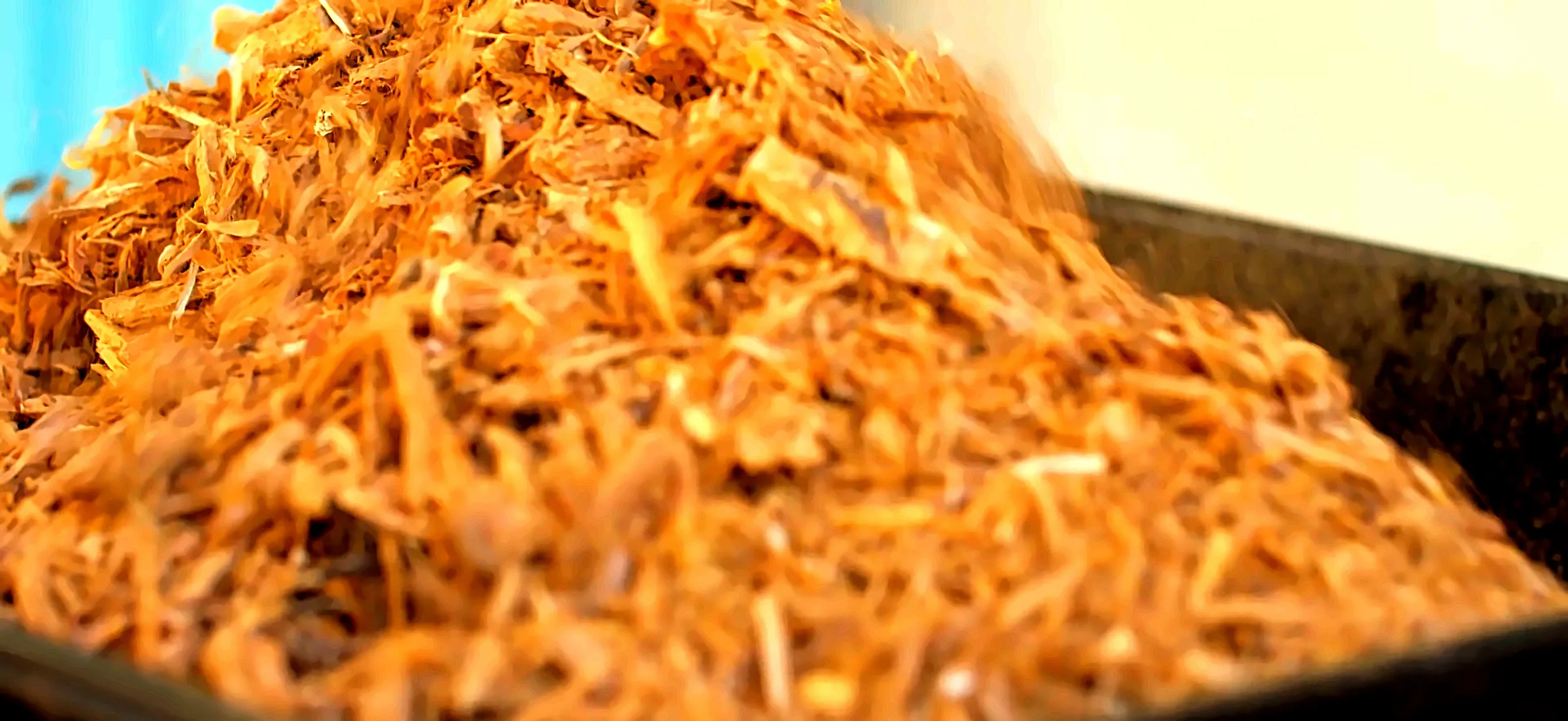
For a fragrance house, weighing Caledonian vs Mysore sandalwood is not a matter of taste alone: it is a trade-off between chemistry, availability, price and legal security. Three botanical origins share the world sandalwood market — India, Australia and the South Pacific — each with its own species name, santalol content and regulatory regime. This guide compares them factually, for the B2B buyers who build their sourcing.
Caledonian vs Mysore sandalwood: which species are we talking about?
“Mysore sandalwood” refers to the wood of Santalum album, the Indian species long held up as the benchmark, named after a historic production region. Australian sandalwood is Santalum spicatum. Pacific sandalwood is a third species, Santalum austrocaledonicum, endemic to New Caledonia and Vanuatu. In New Caledonia, the resource may only be harvested in the Loyalty Islands and the Isle of Pines, according to Outremers360 (2015).
These species are not interchangeable, and the point is not to rank them. Each carries its own molecular makeup and signature. The Mysore name evokes a creamy, milky sandalwood, while Caledonian sandalwood reads as drier, ambery and more mineral. For a perfumer, then, this is not a scale of value but a palette: the choice depends on the effect sought in the formula and on the role the sandalwood will play in the accord.
“Santal de Mysore”: a raw material and a legendary perfume
The Mysore name invites confusion, and it is worth clearing up. It designates both a raw material — the wood of Santalum album — and a line of fragrances that have become cult objects; a niche perfume signed Serge Lutens bears, in fact, precisely the name “Santal de Mysore”. A large share of searches around sandalwood essential oil, the perfume or the eau de parfum in fact point to that mystique, kept alive by enthusiasts on specialist sites and dedicated forums. Liflor, for its part, composes no perfume: the house distils and sells the raw material, the essential oil, to those who will put it into a formula.
That prestige has a flip side. Authentic Indian material has grown so scarce that its trade is closely watched and its volumes spoken for in advance. The myth endures while the resource slips away. It is in that gap that Pacific sandalwood earns its legitimacy — not by imitating the milky roundness of Mysore, but by offering a dry, mineral signature that is available, legal and documented. A perfumer after a reliable woody base note does better to reason in terms of species and chemotype than in terms of an inherited name. That is the whole point of an honest comparison: to replace the prestige of a label with the reading of a composition.
An island terroir, a customary governance
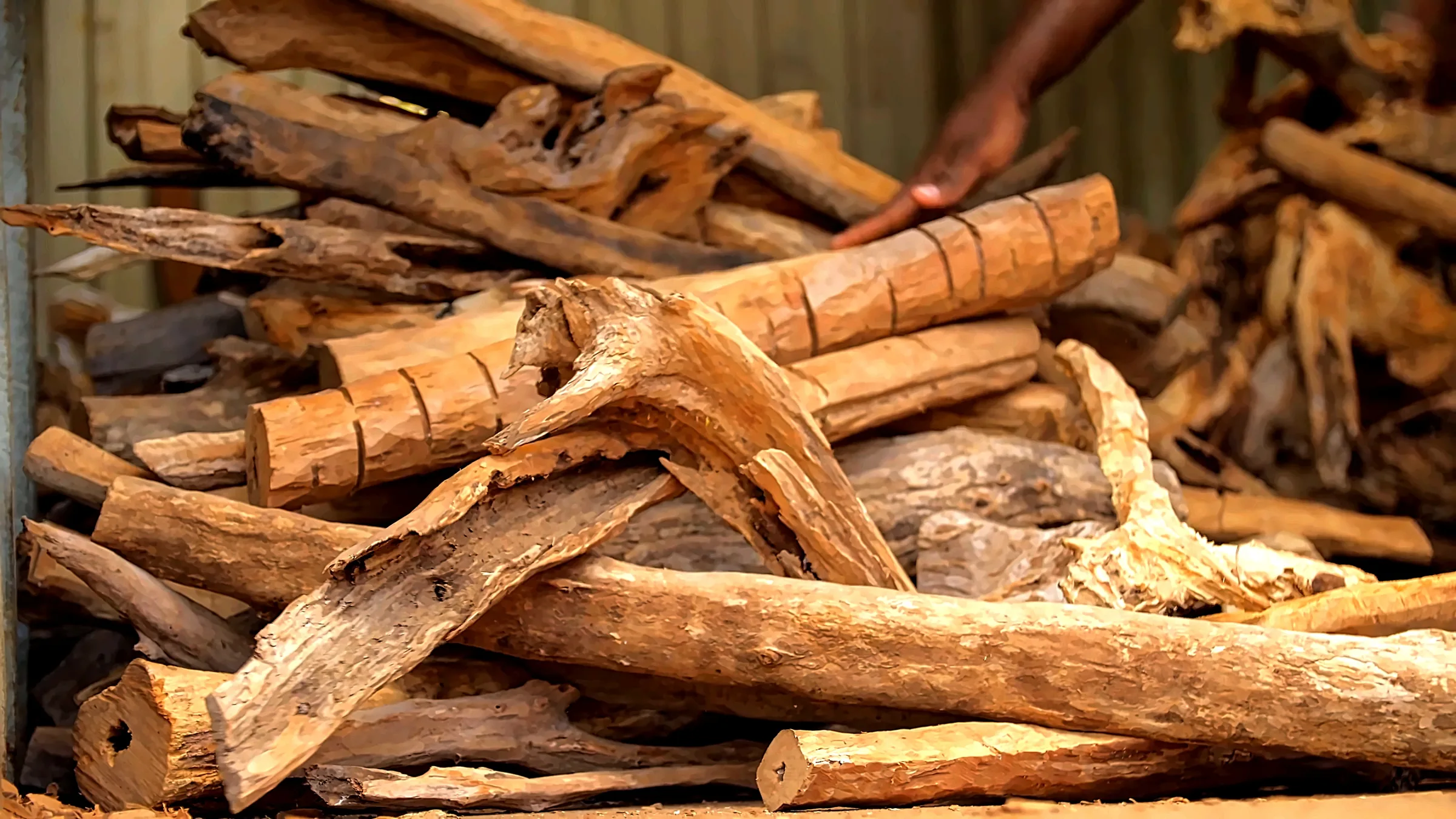
Placing Caledonian sandalwood begins with a glance at the map. The resource is found only in the Loyalty Islands and the Isle of Pines, Outremers360 (2015) notes, on coral soils swept by the trade winds. Liflor harvests and distils its own on Lifou, in the Chépénéhé tribe, within the Wetr district. This island geography draws a short chain: the tree grows, falls and reaches the still on the same land, without passing through an intermediary raw-material market or changing hands at every step.
From the foot of the tree to the drum, the chain never leaves the island: that is the most concrete definition of a traceable origin.
Access to the resource follows Kanak customary law, which has long governed the use of land and wood. There is nothing ornamental in the mention: customary governance determines who may cut, where and in what quantity, echoing the quotas set by the Loyalty Islands Province. For a buyer, this is no folklore but one more guarantee — that of a material taken within a recognised social framework, far from the grey zones that weigh on other world origins. It is also what sets Pacific sandalwood apart from a mere forestry extraction bound for export.
Santalol content: what the chemistry says
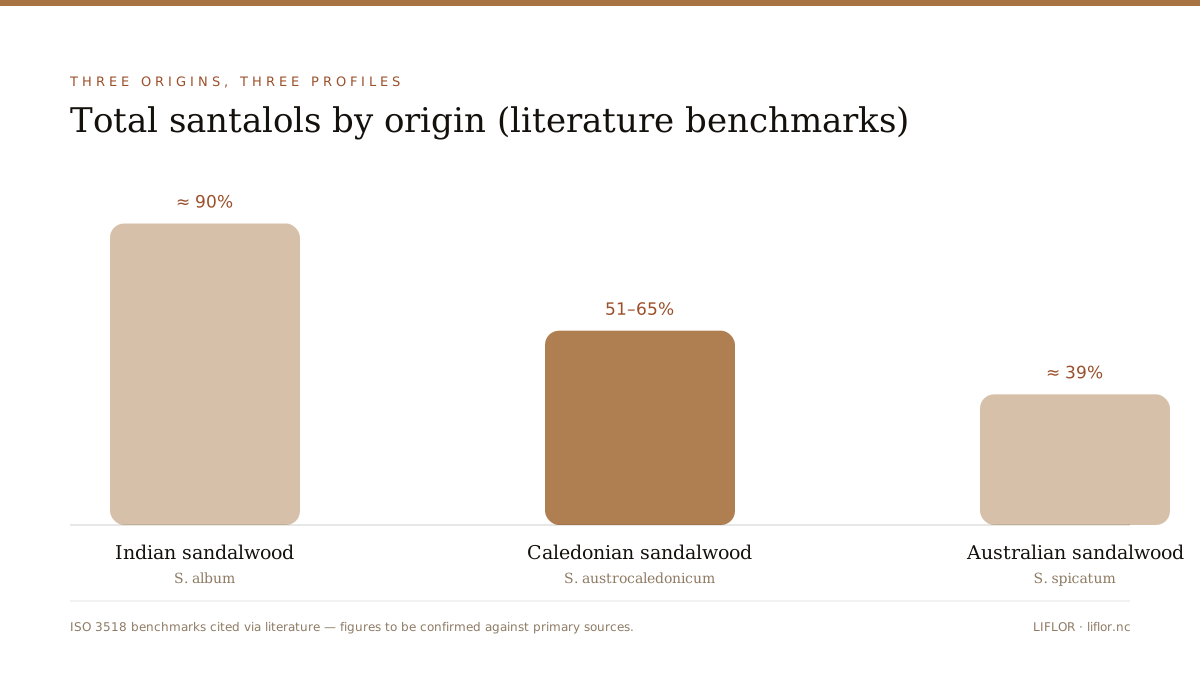
Santalols — alpha- and beta-santalol — are the molecules that carry sandalwood's characteristic odour, and their level varies widely between species. Drawing on the ISO 3518 reference values reported by Wikipedia (to be confirmed against the primary source), Indian sandalwood runs at roughly 90 % santalols, Caledonian sandalwood 51 to 65 %, and Australian sandalwood close to 39 %.
Content alone does not sum up quality. The Caledonian profile also rests on secondary molecules: per Wikiphyto (New Caledonian chemotype, to be confirmed via ISO 3518), Santalum austrocaledonicum oil combines cis-alpha-santalol (38 to 45 %), cis-beta-santalol (12 to 17 %), lanceol (4 to 13 %) and alpha-bergamotol (3 to 8 %). It is that combination, more than the santalol figure alone, that gives the dry, ambery character some houses look for. Our technical specifications detail the chemotype of the Lifou oil.
According to the ISO 3518 reference values, Indian sandalwood runs at about 90 % santalols, Caledonian sandalwood 51 to 65 %, and Australian sandalwood close to 39 % (to be confirmed against the primary source).
How to assess a sandalwood before writing it into a formula
Before committing a material to a formula, an evaluator does not trust the name on the label alone. They read a certificate of analysis: gas chromatography, coupled with mass spectrometry, sets out the molecular profile batch by batch and confirms the stated santalol content. For Caledonian sandalwood, one checks that total santalols fall within the expected range — on the order of 51 to 65 % per the ISO 3518 figures relayed by Wikipedia, a primary source to be confirmed — and that lanceol and alpha-bergamotol duly sign the chemotype specific to the species, distinct from that of Santalum album.
Analysis, however, does not replace the nose. Olfactory evaluation is carried out on a blotter and over time: the material is followed from first contact to the drydown, several hours later, where sandalwood reveals its true tenacity as a fixative. Batch-to-batch consistency then matters as much as the performance of a single lot, since a formula renewed year after year demands steadiness. That is exactly what a traceable distillation documents, batch by batch, in our specifications. A sample with its certificate lets you decide without gambling.
Price, availability and regulation
The sandalwood oil market is structurally tight. Grand View Research valued it at USD 174.4 million in 2024, projecting USD 261.7 million by 2030 — around 7 % annual growth. On the supply side, a 2024 Springer study puts world demand for Santalum album at 5,000 to 6,000 tonnes a year, against a resource constrained by growth cycles of fifteen to twenty years and more. Caledonian sandalwood, for its part, reaches maturity around thirty years in the wild and fifteen to twenty-five in plantation, according to Takone.
That scarcity shows in prices. Global Growth Insights (2025) puts Indian sandalwood oil at roughly USD 3,800 to 4,200 per kilo and Australian oil at USD 1,600 to 2,000; the price of Caledonian sandalwood is not public. Regulation compounds the resource constraint: some origins fall under protection schemes or state export monopolies, and buyers track international frameworks such as CITES, whose status must be checked species by species. In New Caledonia, exporting raw sandalwood is banned, with processing required on the islands, per Outremers360 (2015).
Woods, chypres, cosmetics: where Pacific sandalwood comes into its own
The dryness of Caledonian sandalwood makes it a material of construction more than of ornament. As a base note, it structures a contemporary woody accord, shores up a reworked chypre or tempers the opulence of a white flower without ever sweetening it. Where a creamy sandalwood imposes its roundness, the Lifou chemotype slips in as support, discreet and tenacious, which appeals to the minimalist compositions and unisex woods prized in niche perfumery. Its dosage is meant to be measured: its persistence does the rest.
- Contemporary woods: a dry, mineral base that structures without weighing down.
- Reworked chypres and fougères: a refined base, an alternative to milky sandalwoods.
- White florals and orientals: a counterpoint that tempers opulence without crushing it.
- Scented cosmetics: soaps, skincare and bases where sandalwood plays its fixative role.
Beyond the bottle, the material finds its place in scented cosmetics, where its persistence extends the trail of a soap or a skincare base. Perfumery attentive to origins reads in it a story as much as an olfactory performance: naming an island terroir, an endemic species and a traceable distillation feeds the “origin story” a demanding clientele expects, and that now accompanies every niche launch. Our origin comparison helps in choosing the species according to the effect sought, without pitting terroirs against one another.
Sustainability and traceability: the Pacific advantage
In fine perfumery, an origin is no longer judged by the nose alone. Traceability and proof of sustainable management have become purchasing criteria in their own right. The Caledonian sector rests on a defined framework: deliberation no. 2010-71/API of 19 August 2010 governs cutting, with annual quotas and a resource inventory roughly every ten years (ERPA). The Loyalty Islands Province requires three trees planted for every tree felled, together with a cutting certificate, according to FSC.
This has translated into FSC forest certification covering almost 58,000 hectares, a project launched in 2018 and certified in November 2022 (FSC). Liflor is part of this momentum: the house has partnered with LMR Naturals by IFF since 2017, with planting under way since 2020, and holds ECOCERT For Life certification (IFF). We set out the approach on our sustainability page.
How to choose your sandalwood origin
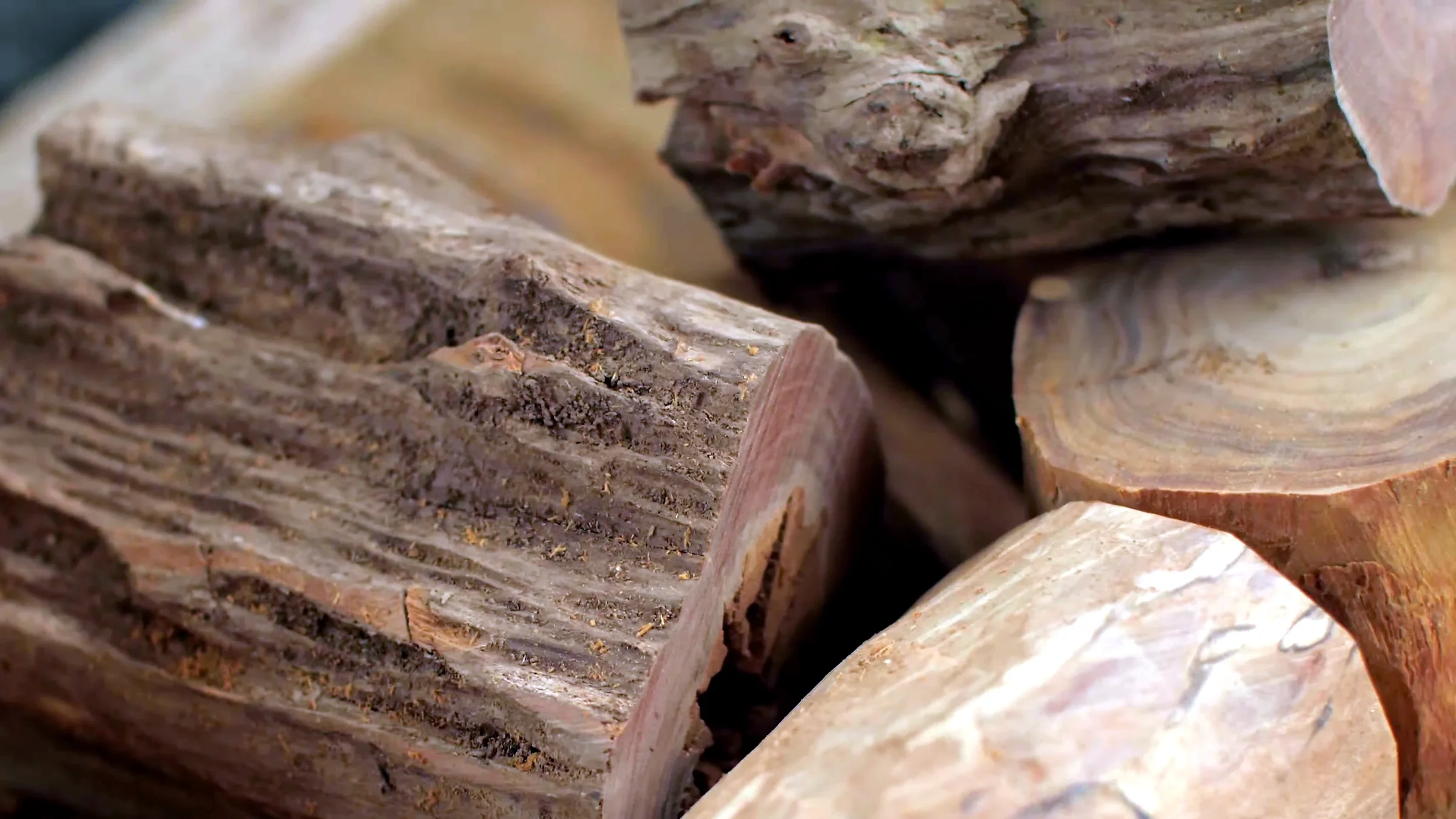
The right choice follows a hierarchy of criteria that each house sets for itself. A few markers to weigh:
- The target olfactory profile: creamy and milky, or dry, ambery and mineral.
- Material budget and supply stability over time.
- CSR requirements: traceable origin, sustainable management, verifiable certification.
- Legal security: lawful cutting and export, compliance with perfumery standards.
On these criteria, an endemic, legal and traceable origin such as Lifou sandalwood offers a differentiating profile and a short chain, from terroir to still. The question is less about the best sandalwood than the right sandalwood — for your formula as much as for your commitments.
Frequently asked questions
What is the difference between Caledonian and Mysore sandalwood?
Mysore sandalwood refers to Indian Santalum album, whereas Caledonian sandalwood is a distinct species, Santalum austrocaledonicum, endemic to New Caledonia. Their santalol composition and olfactory profile differ: the Caledonian is described as drier and ambery, the Indian as creamier and milkier.
Is Caledonian sandalwood lower in santalol than Indian sandalwood?
In raw content, yes: according to ISO 3518 values (to be confirmed), Indian sandalwood runs at about 90 % santalols versus 51 to 65 % for Caledonian sandalwood. That figure does not define olfactory quality on its own, which also depends on molecules such as lanceol and bergamotol.
Why choose Pacific sandalwood for fine perfumery?
For traceability and sustainability: cutting is governed by Loyalty Islands Province quotas, with three trees replanted for each one felled (FSC) and local processing. Liflor adds a partnership with LMR Naturals by IFF since 2017 and ECOCERT For Life certification.
Can Caledonian sandalwood be ordered from abroad?
Yes. Liflor sells B2B internationally, packs in drums and ships worldwide; pricing and certificates of analysis are provided on request.
Is the “Santal de Mysore” people look for as a perfume the same thing as the raw material?
Not quite. “Santal de Mysore” names both the raw wood of Santalum album and fragrances that bear the name, such as a niche eau de parfum signed Serge Lutens. Liflor does not sell a finished perfume but the raw Caledonian sandalwood essential oil (Santalum austrocaledonicum), meant for the houses that put it into a formula.
How do you check the quality of a sandalwood essential oil before buying?
You cross two readings: a certificate of analysis (gas chromatography and mass spectrometry) confirming santalol content and chemotype, and an olfactory evaluation on a blotter followed to the drydown. Batch-to-batch consistency is a decisive criterion for a formula. Liflor provides the chemotype and a certificate of analysis on request.
To place Caledonian sandalwood in your palette or request a sample, ask for a quote: we share the chemotype, packaging terms and traceability details.
Sourcing Caledonian sandalwood for a project? Talk to the distillery.
Request a quote